

Dr. Irena Starchenko, DDS is a general dentist with 30+ years of clinical experience, graduate of the University of Southern California (USC), and member of the American Dental Association (ADA) and Academy of General Dentistry (AGD). Practices at Dental Line, 18024 Ventura Blvd, Encino, CA 91316.
Practice overview: About Dental Line Dentistry in Encino, LA
Most patients researching dental implants at Dental Line have the same core concerns before booking a consultation: is this safe for me, will it last, and what does it actually involve. This FAQ answers the 15 questions Dental Line patients ask most before starting treatment, covering materials, eligibility, bone health, longevity, risk, insurance, full-arch options, recovery, and aftercare. Dental implants are one part of the Restorative Dentistry in Encino, CA services offered at Dental Line. For pricing, implant brand, and the step-by-step timeline, see Dental Implants In Encino, CA; for which clinician performs your surgery, see Who Places Dental Implants? [Specialists Guide].
1. What Are Dental Implants Made Of?
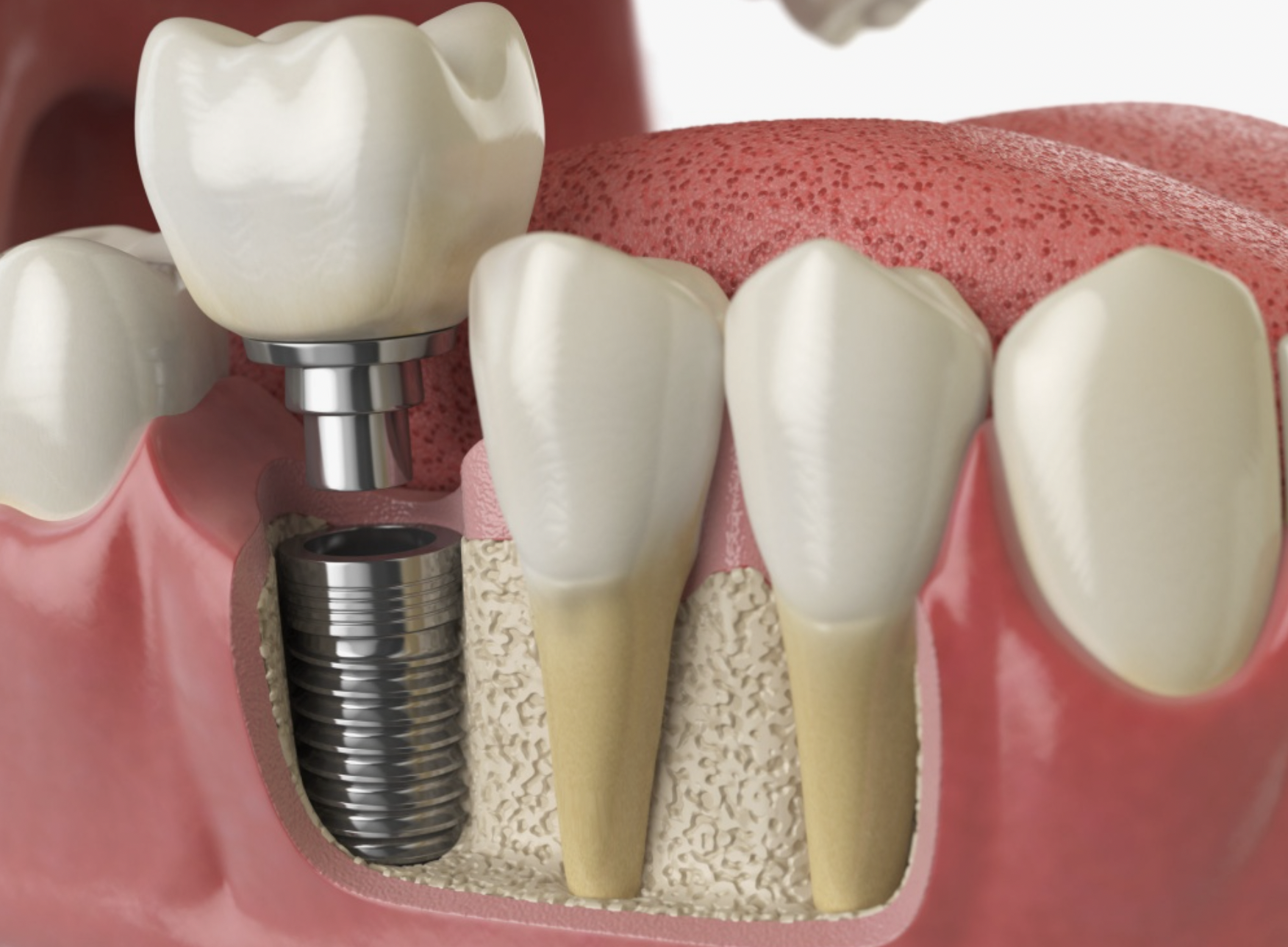
Dental implants are made of medical-grade titanium or zirconia, both biocompatible materials that fuse directly with living bone through a process called osseointegration. At Dental Line, implant fixtures are premium Swiss-engineered Straumann implants, chosen for a documented track record of long-term stability. Titanium remains the most common choice because of its strength and decades of clinical data; zirconia is a tooth-colored alternative sometimes preferred for patients with metal sensitivities or thin gum tissue where a titanium post could show through.
2. Is There an Age Limit for Dental Implants?
There is no fixed upper age limit for dental implants, as candidacy depends on bone health and overall medical stability, not the number on a birth certificate. Patients in their 70s and 80s regularly qualify for implants once their jawbone density and general health are confirmed with a CBCT 3D scan. The one firm lower-age rule: implants are not placed until the jaw has finished growing, typically around age 18, since placing an implant into a still-developing jaw can leave it misaligned as growth continues around it.
3. Can You Get Dental Implants If You Smoke?
Smoking does not automatically disqualify a patient from dental implants, but it does raise the failure risk. Nicotine restricts blood flow to the gums and jawbone, which slows healing and lowers the odds of successful osseointegration. Published research shows implant failure rates roughly 2–3 times higher in smokers than non-smokers. Ask about implants, if you currently smoke, so your dentist can discuss a pre- and post-surgery cessation plan; even a temporary pause around the healing window measurably improves outcomes. (Source: NIH/NCBI — Success Rate of Dental Implants in Smokers, Umbrella Review)
4. Can You Get Dental Implants If You Have Diabetes?
Well-controlled diabetes is not a barrier to dental implants, but uncontrolled blood sugar is one of the two factors (alongside heavy smoking) most likely to compromise healing. Stable blood glucose supports normal wound healing and reduces infection risk during osseointegration, the 3–6 month period when bone fuses to the implant post. Confirm your HbA1c levels with your physician, if you have diabetes, before scheduling surgery — most dentists coordinate directly with your medical provider to time treatment for your healthiest healing window.
5. What Happens If You Don’t Have Enough Jawbone for an Implant?
Insufficient jawbone does not rule out implants; bone grafting rebuilds the site first. Tooth loss causes the surrounding bone to resorb over time, and a CBCT 3D scan reveals exactly how much density and volume remain before placement. Common solutions include bone grafting to add volume, ridge augmentation to rebuild width, and sinus lifts for upper-jaw cases where the sinus cavity sits too close to the intended implant site. Grafting adds several months to the overall timeline but creates the stable foundation implants need for long-term success. See Our Equipment & Technology for how CBCT imaging is used during planning.
6. How Long Do Dental Implants Last?
Dental implants can last 20 years or longer, and many patients keep theirs for life, as, as the titanium post itself rarely needs replacement once it has fused with the jawbone. The crown attached to the implant is the part most likely to need attention, typically holding up for 10–15 years before normal wear calls for a replacement or adjustment. Longevity depends heavily on maintenance: implants with consistent oral hygiene and regular checkups outlast those without, while untreated gum inflammation around an implant (peri-implantitis) is the leading cause of early failure. (Source: ScienceDirect — 10-Year Survival & Success Rates of Dental Implants, Systematic Review)
7. What Are the Risks and Possible Complications of Dental Implants?
Dental implants have a high success rate (95% for the lower jaw and 92% for the upper jaw at Dental Line), but they carry the same general risks as any surgical procedure. Possible complications include infection at the surgical site, nerve or sinus damage from improper placement, implant failure from insufficient osseointegration, and peri-implantitis, a gum infection around the implant that can lead to bone loss if untreated. Modern safeguards substantially lower these risks: CBCT 3D imaging maps nerve and sinus locations before surgery, and factors like smoking, uncontrolled diabetes, and poor oral hygiene are the variables most associated with complications, not the procedure itself.
8. What Are the Warning Signs of Dental Implant Failure?
Persistent pain, looseness, and gum swelling around an implant are the three main warning signs of failure, and any one of them should prompt a same-week call to your dentist. Additional signs include difficulty chewing on the implanted side, visible gum recession exposing metal, and bleeding that continues beyond the initial healing period. Most failures are caught early with routine follow-up radiographs, if patients keep their scheduled checkups, which is why post-placement monitoring matters as much as the surgery itself. Peri-implantitis behaves like an infection of the surrounding gum tissue; see our Gum Disease Treatment in Encino: Periodontal Therapy Guide for how we diagnose and treat it.
9. Does Insurance Cover Dental Implants?
Standard PPO dental insurance typically does not cover the implant post itself, but many plans partially cover the crown or restorative component. Coverage varies significantly by carrier and plan tier, so implants are usually billed as a combination of insurance benefit (where applicable) plus out-of-pocket or financing. Dental Line accepts most PPO dental insurance plans and offers flexible financing options, with treatment starting from $1,800, so patients can spread the cost of restoring a missing tooth without paying the full amount upfront. See Dental Implants In Encino, CA for full pricing details, or check our current Fixed Packages & Discounts for reduced-cost evaluation options.
10. Can All Your Teeth Be Replaced With Implants?
Yes, full-arch implant restorations can replace an entire row of teeth using as few as four to six strategically placed implants, rather than one implant per missing tooth. This approach, often called full-arch or implant-supported denture treatment, anchors a complete prosthetic arch to a small number of implant posts, giving patients fixed, non-removable replacement teeth instead of traditional dentures. Full-arch cases require more extensive planning (CBCT imaging, occlusal/bite analysis, and prosthetic design) and are typically coordinated between a restorative dentist and a surgical partner to align the implant positions with the final prosthesis. Compare this to removable options on our Dentures page.
11. What Does Recovery Feel Like Day by Day?
Most patients experience mild swelling and soreness for 3–5 days after implant placement, manageable with over-the-counter pain medication. The first 24–48 hours involve the most discomfort and any minor bleeding; days 3–5 bring peak swelling before it steadily subsides; by day 7–10, most patients feel back to normal daily function. The deeper healing process (osseointegration, where the implant fuses to the jawbone) continues quietly underneath for 3–6 months and doesn’t come with ongoing discomfort once the initial surgical site has healed.
12. How Do You Care for Dental Implants After Placement?
Dental implants are cared for the same way as natural teeth: brushing twice daily, flossing once daily, and keeping regular dental checkups. Use a soft-bristled brush and a low-abrasive toothpaste around the implant crown, and add an interdental brush or water flosser to clean around the abutment where a standard floss thread can miss plaque. Schedule a professional cleaning and checkup every six months, if you want to catch early signs of peri-implantitis, since this gum infection is the single biggest threat to an otherwise successful implant’s long-term survival.
13. Can You Eat Normally After Getting Implants?
Yes, once fully healed, dental implants function like natural teeth and place no restrictions on your diet. During the first 1–2 weeks after surgery, a soft-food diet (yogurt, eggs, soup, mashed vegetables) protects the healing site, followed by a gradual return to firmer foods as swelling resolves. This is one of the clearest advantages implants hold over removable dentures: patients can bite into apples, steak, and nuts without the slipping or dietary limitations that come with a removable prosthesis.
14. What’s the Difference Between a Single Implant and Multiple Implants?
A single implant replaces one missing tooth with one post and one crown, while multiple implants can support several individual crowns, an implant-supported bridge spanning a few missing teeth, or a full-arch prosthesis replacing an entire row.
| Type | Implants Used | Best For |
| Single Implant | 1 implant + 1 crown | Replacing one missing tooth |
| Implant-Supported Bridge | 2–4 implants + multi-tooth bridge | Replacing several adjacent missing teeth |
| Full-Arch Restoration | 4–6 implants + full prosthetic arch | Replacing an entire upper or lower arch |
The right option depends on how many teeth are missing and their position, which is why treatment planning starts with a CBCT scan and a discussion of your specific bite and jawbone anatomy.
15. What Questions Should You Ask During an Implant Consultation?
Ask about your candidacy, the implant brand used, the full cost breakdown, and the expected timeline before committing to treatment. Specific questions worth bringing to your consultation:
- What does the CBCT scan show about my bone density?
- Will I need bone grafting?
- What implant brand and material will be used?
- What is included in the quoted price, and what financing or insurance options apply?
- Who performs the surgical placement versus the final restoration?
- What is the expected healing timeline for my specific case?
A clear answer to each of these, before you schedule surgery, is a strong sign you’re working with a practice that plans prosthetically-driven, CBCT-guided treatment rather than a one-size-fits-all approach. For a breakdown of which clinician handles each part of your care, see Who Places Dental Implants? [Specialists Guide].
READY TO FIND OUT IF YOU’RE A CANDIDATE?
Dr. Irena Starchenko uses CBCT 3D imaging to evaluate your bone density and give you a clear, personalized answer at your consultation. Read what other patients say on our Encino Dentist Reviews & Testimonials page.
Make an Appointment at Dental Line in Encino, or call (747) 265-6179.