
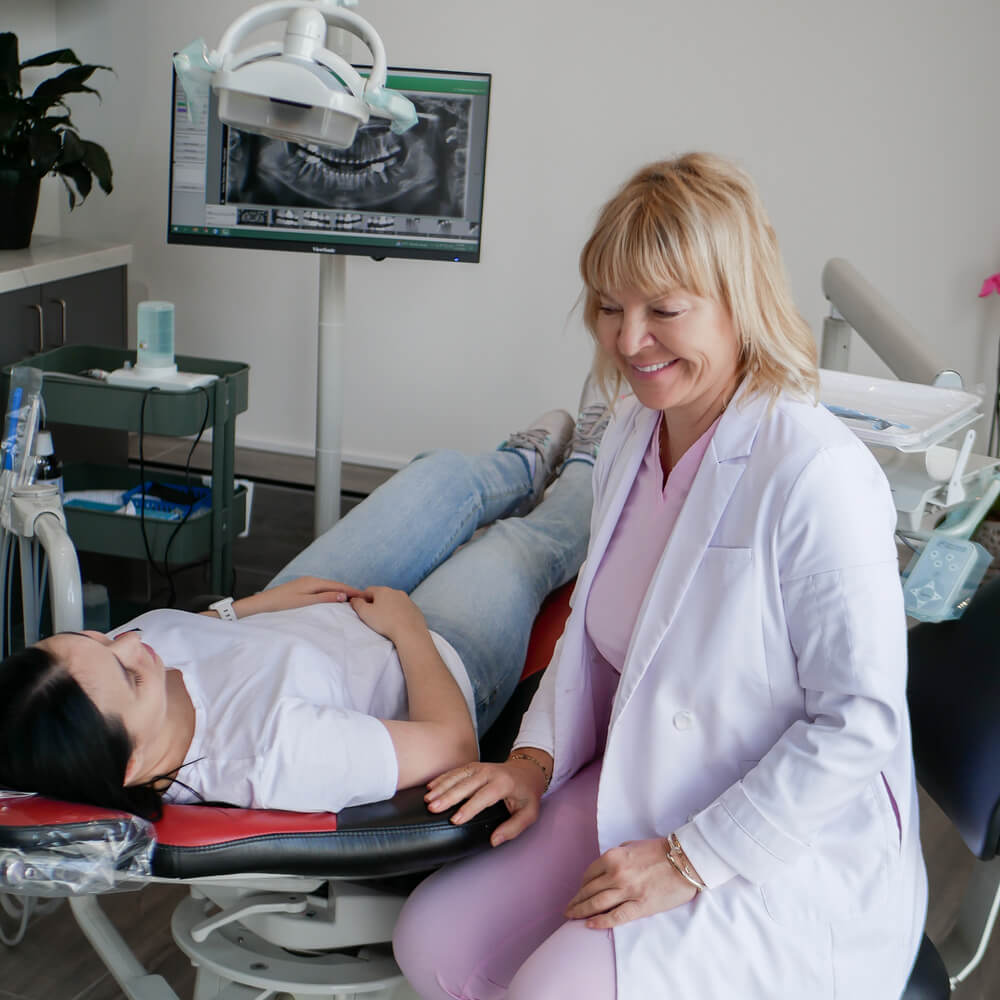
Сomprehensive evaluation and full mouth radiographs for $129. Offer valid through 05/31/26.

Dr. Irena Starchenko, DDS
Dr. Irena Starchenko provides cosmetic dentistry in Tarzana using conservative, precise techniques. She focuses on improving shape, shade, and tooth alignment with long-lasting, safe treatments.
Patients choose her for restorative and cosmetic care because of her deep understanding of smile harmony. She provides individualized recommendations to help patients reach their dental goals without over-treatment.
What Our Clients Say
Dental crowns are custom caps that cover a damaged, decayed or weakened tooth and give back its strength and shape. At Dental Line in Encino, most of the crowns we place are porcelain or zirconia, matched to the shade of your neighboring teeth. We also offer ceramic, gold and metal options when strength matters more than looks.
You might need a crown after a root canal, when a cavity is too big for a filling, when a tooth has cracked, or to top a dental implant or anchor a bridge. We accept most major PPO plans, offer Cherry financing, and we’re open Sunday through Friday at 18024 Ventura Blvd. Patients come to us from Encino, Sherman Oaks, Tarzana and Woodland Hills.
Dental crowns are tooth-shaped caps placed over weak or damaged teeth to restore strength, shape, and appearance. They protect teeth from further decay or breakage while improving chewing and comfort. Crowns also support restorations like bridges or dental implants, making them an essential treatment in restorative dentistry.
Crowns are made from materials such as porcelain, ceramic, zirconia, or gold, chosen based on durability, aesthetics, and budget. Porcelain and zirconia crowns resemble natural tooth enamel, while gold offers strong function. The material selected ensures both long-term stability and a natural-looking smile for each patient.
Getting a crown starts with preparing the tooth. Then, instead of a tray of impression putty, we take a digital scan with an intraoral scanner, a small handheld camera that builds a 3D model of your teeth in a few minutes. A dental lab makes your crown from that scan, and you wear a temporary crown in the meantime. Once the permanent crown is ready, it’s cemented in place. Most crowns take two visits.
Porcelain crowns are stain-resistant, natural-looking, and durable, making them one of the most trusted materials for restoring teeth. They can be shaped to match your natural tooth enamel and blend in with nearby teeth. With proper oral hygiene and regular dental visits, porcelain crowns can last 10 to 20 years, helping patients maintain confidence, chewing strength, and long-term dental health.
Porcelain crowns provide both cosmetic and restorative advantages:
Aesthetic enhancement: Porcelain crowns restore the look of damaged teeth by mimicking natural enamel. They support cosmetic dentistry goals like smile makeovers and are often chosen when front teeth are affected. Patients benefit from crowns that improve tooth color, shape, and alignment while maintaining a natural appearance.
Durability: High-quality porcelain crowns are built to last for many years. When cared for with good oral hygiene, they typically last between 10 to 20 years before replacement is needed, offering strong protection against daily wear.
Protection: Porcelain crowns safeguard weak or damaged teeth from further decay and cracks. They can also support teeth treated with a root canal, reducing the need for extractions or advanced procedures while preserving natural tooth structure.
The porcelain crown procedure is usually completed in two visits.
Visit one. We numb the tooth with a local anesthetic, so you’ll feel pressure but not pain. Dr. Starchenko removes any decay and shapes the tooth so the crown can fit over it. Then we scan it with the intraoral scanner. You leave with a temporary crown that protects the tooth while the lab makes your permanent one, which typically takes about two weeks. The numbness usually wears off within a few hours (here’s what to expect).
Visit two. The temporary crown comes off, and the permanent porcelain crown is fitted, checked against your bite, adjusted and cemented in place. This visit is quicker, often about half an hour.
If dental visits make you anxious, ask about sedation options when you book. With proper oral hygiene, porcelain crowns can last 10 to 20 years.
The cost of porcelain crowns depends on the material, procedure, and any additional dental work required. Porcelain is more natural-looking and durable than metal, but it is also more expensive. On average, porcelain crowns in Encino may range from $790 to $3,000. Costs may increase if other treatments are needed before crown placement, such as a root canal or implant support.
With insurance: we accept most major PPO plans, including Aetna, Cigna, Delta Dental, Guardian, MetLife and UnitedHealthcare. Most PPO plans pay part of a crown when it’s medically needed. Crowns placed only for looks usually aren’t covered. We’ll verify your benefits and give you an estimate before treatment. We don’t accept HMO plans. See every plan we accept.
Paying over time: Cherry financing lets you split the cost into 4 interest-free payments, or choose a longer monthly plan if you qualify, with no hard credit check. See financing options.
The cost of dental crowns depends on several factors, including the type of crown, location, and any extra dental work needed before placement. Options include porcelain, zirconia, ceramic, or metal crowns, each with different price ranges based on durability and aesthetics. Insurance coverage also plays a key role in the out-of-pocket expense for patients.
At Dental Line, most crowns are porcelain or zirconia, designed to match tooth enamel and provide long-lasting results. Patients may require two visits for preparation and placement, with total time ranging from two to three hours. Costs may increase if the tooth needs a root canal or implant support before fitting the crown.
Metal crowns are a reliable and affordable option for patients who need strong protection but may not have full dental insurance coverage. These crowns, often called all-metal or metal-ceramic restorations, are made with durable alloys that withstand heavy chewing forces. They can last 15–20 years or longer with proper oral hygiene and maintenance. While less natural in appearance than porcelain, metal crowns remain a trusted choice for back teeth where strength and longevity are most important.
Dental crowns are used to restore teeth with significant damage or decay, but not every crown requires a root canal. If the tooth’s pulp remains healthy, a crown may be placed without additional treatment. However, when the pulp is infected or inflamed, root canal therapy becomes necessary before placing the crown. This prevents pain, protects the tooth’s structure, and ensures long-term success of the restoration. Your dentist will evaluate each case with exams and imaging to decide the best approach.
A root canal removes infected pulp from inside the tooth to stop pain and save its structure. After treatment, a crown is often recommended if much of the enamel has been weakened, as it restores strength and protects the tooth from fracture. Crowns also help improve chewing function and extend the life of the restored tooth. However, not every root canal requires a crown. If the enamel remains mostly intact, a permanent filling may be enough. Your dentist will guide the best option based on tooth condition.
Even with good oral hygiene, many patients need dental crowns to restore teeth weakened by decay, cracks, or wear. At Dental Line, we provide porcelain, zirconia, and metal crowns that protect damaged enamel, improve chewing, and maintain a natural smile. Our Encino dental office uses advanced technology and proven techniques to ensure crowns fit comfortably and last for years with proper care.
Make sure to get the information necessary before making this choice, as there is nothing more important to your oral health than a healthy smile. Search for dental crowns near me, and if you are in the vicinity of the Dental Line, we can help you make the most appropriate decision for your specific needs. Call us today at (747) 265-6179 or come to visit us 18024 Ventura Blvd, Encino, CA 91316.
Author: Dr. Irena Starchenko
– Filling: the cavity is small and most of the tooth is still healthy. A filling repairs the hole without covering the tooth.
– Inlay or onlay: the damage is too big for a filling but doesn’t reach the whole tooth. An onlay covers only the part that’s damaged, so more of your natural tooth stays.
– Crown: the tooth is cracked, badly broken down, worn flat, or has had a root canal and is now brittle. A crown covers the whole tooth down to the gumline and holds it together.
– Veneer: the tooth is healthy and you want to change how it looks. A veneer covers only the front surface.
If you’re not sure which one you need, that’s what the exam is for. We’ll show you the scan and the X-rays and explain the reasoning before anything is decided.
| Material | Best for | Look | Strength |
|---|---|---|---|
| Porcelain / ceramic | Front teeth, visible smile zone | Closest match to natural enamel | Strong, but can chip under heavy grinding |
| Zirconia | Back teeth, people who grind | Tooth-colored, slightly more opaque | Very high; holds up to heavy chewing |
| Porcelain fused to metal | Patients who want tooth color with a metal core | Tooth-colored, but a thin dark line can show at the gum as gums recede | High |
| Gold / all-metal | Back molars where no one sees them | Metallic | Highest; the most wear-resistant |
Most patients at our office end up with porcelain on front teeth and zirconia on back teeth. If you clench or grind at night, tell us. It changes which material we’d recommend.
Crowns don’t last forever. Call us if one feels loose, has chipped, hurts when you bite, or the gum around it is sore or bleeding. Those are signs that decay may have started at the edge or the crown no longer fits well. With older porcelain-fused-to-metal crowns, you may also see a dark line at the gum as the gums recede.
A crown that falls off or breaks counts as a dental emergency. We offer same-day emergency visits, Sundays included. Keep the crown if you have it and bring it with you. If you’re wondering who should pay when a fairly new crown fails, we wrote a separate guide: is your dentist responsible for a failed crown?