
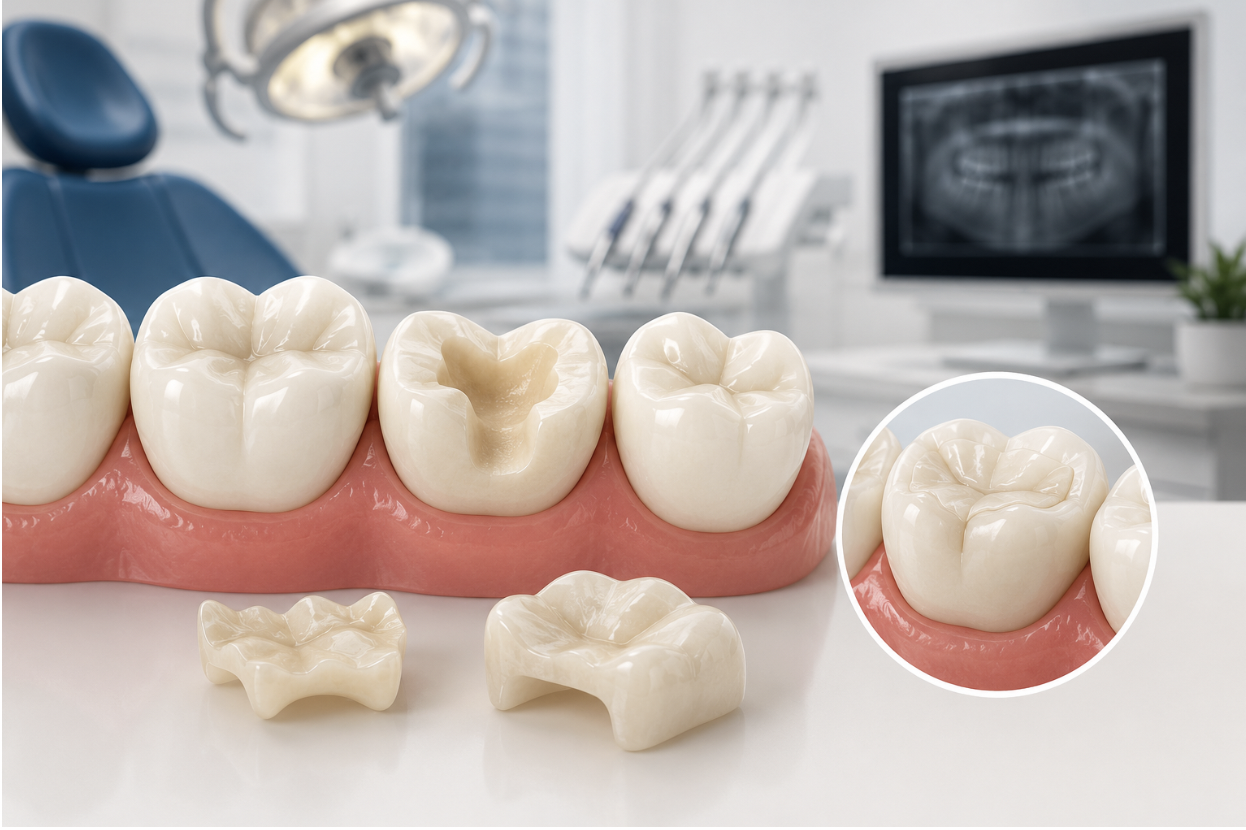

Inlays and onlays are conservative, high‑precision restorations that repair damaged teeth while keeping as much natural tooth structure intact as possible. Compared with conventional fillings, these indirect restorations deliver greater strength and a more lifelike appearance. Advances in materials and digital fabrication—common in Encino practices—help ensure a precise fit, improved durability, and a natural look.
More patients are choosing alternatives that restore function without compromising cosmetics. Below we explain how inlays and onlays differ, the materials typically used, what to expect during treatment, and the potential benefits over traditional fillings. We also cover typical costs and insurance considerations for residents of Encino.
What Are Dental Inlays and Onlays? Definitions and Key Differences
Inlays and onlays are indirect restorations made outside the mouth and bonded into place. An inlay fits within the cusps on the chewing surface, repairing internal damage. An onlay covers one or more cusps and can restore larger areas while avoiding a full crown. For a broader look at repair options, see restorative dentistry.
How Do Inlays Differ from Onlays in Tooth Coverage?
Think of an inlay as a precise patch for the central chewing surface; an onlay extends over the tooth’s cusps to rebuild lost structure. The extent of decay or fracture determines which restoration is best.
Why Are Inlays and Onlays Considered Minimally Invasive Restorations?
These treatments remove less healthy tooth structure than crowns. By preserving more of the natural tooth, inlays and onlays help maintain strength and reduce the likelihood of needing more invasive care in the future.
Which Materials Are Used for Dental Inlays and Onlays in Encino?
Common materials include porcelain (ceramic), composite resin, and gold. Each option has strengths: porcelain offers excellent aesthetics and stain resistance; composite blends well with natural tooth color and can be more conservative; gold remains highly durable and biocompatible. Your dentist will recommend the best material based on location, bite forces, and cosmetic goals.
What Are the Benefits of Ceramic Inlays Compared to Composite Options?
Ceramic inlays are prized for their lifelike translucency and long‑term color stability. They resist wear and staining better than many composites, making them a strong choice for visible areas. Composites, however, can be a good, more economical alternative when moderate aesthetics and conservative preparation are priorities.
How Does CAD/CAM Technology Enhance Inlay and Onlay Fabrication?
CAD/CAM systems allow clinicians to scan, design, and mill restorations with exceptional accuracy—often in a single visit. Digital workflows produce well‑fitting restorations with consistent quality, reduce human error in the lab process, and speed up treatment timelines.
CAD/CAM: Advancements in Dental Restorations for Inlays and Onlays
CAD/CAM technology improves material consistency, precision, and reproducibility while enabling standardized production and efficient data storage. As software and hardware evolve, digital methods continue to raise restoration quality and may reduce costs over time.Digital dentistry: an overview of recent developments for CAD
How Is the Procedure for Dental Inlays and Onlays Performed?
Treatment typically starts with an exam and X‑rays to determine the extent of damage. From there, your dentist will recommend the most appropriate restoration and explain the steps involved.
What Are the Step-by-Step Treatment Phases for Inlay and Onlay Placement?
- Diagnosis and treatment planning: Your dentist evaluates the tooth, discusses options, and develops a treatment plan.
- Tooth preparation: Decay or old material is removed and the tooth is shaped conservatively to receive the restoration.
- Impressions or digital scans: A traditional impression or an intraoral scan captures the tooth geometry for a precise fit.
- Temporary restoration: If the final piece is made in a lab, a temporary will protect the tooth until the permanent inlay or onlay is ready.
- Final placement: The restoration is bonded, adjusted for comfort and bite, and polished for a natural finish.
What Aftercare Practices Ensure Longevity and Comfort?
Good oral hygiene—brushing twice daily with fluoride toothpaste, flossing, and regular dental checkups—extends the life of inlays and onlays. Avoiding very hard foods and wearing a nightguard if you grind your teeth can also protect the restoration.
What Are the Advantages of Choosing Inlays and Onlays Over Traditional Fillings?
Inlays and onlays offer superior strength and a more precise fit than many direct fillings. They redistribute chewing forces effectively, resist wear better, and can provide a longer‑lasting restoration while improving cosmetic outcomes.
How Do Inlays and Onlays Improve Tooth Durability and Structural Integrity?
Because they are fabricated to fit the tooth precisely and bonded securely, inlays and onlays reinforce remaining tooth structure and reduce the chance of recurrent decay or fracture compared with larger direct restorations.
In What Ways Do Inlays and Onlays Enhance Cosmetic Dental Outcomes in Encino?
Tooth‑colored ceramics and composite inlays/onlays blend with your natural enamel for a seamless result. This makes them an excellent choice for patients who want durable restorations that look and feel natural. If you’re also considering aesthetic improvements, explore cosmetic dentistry options available locally.
What Are the Cost and Insurance Options for Dental Inlays and Onlays in Encino?
Costs vary by material, complexity, and provider. Ceramic inlays commonly range from about $800 to $2,500 per tooth; onlays fall in a similar range. Your dentist can provide a personalized estimate based on your specific needs.
How Much Do Inlays and Onlays Typically Cost Locally?
Pricing in Encino depends on the provider’s experience, material choice, and any additional procedures needed. Many practices offer treatment consultations to review options and costs. If you’re nearby, providers in the Tarzana area can also discuss tailored care—see dentist Tarzana CA for local options.
Which Insurance Plans Commonly Cover These Restorative Procedures?
Many dental plans cover a portion of the cost for inlays and onlays when they’re considered necessary for restoring dental health. Coverage levels and restrictions vary, so check your policy or speak with your insurer and dental office to clarify benefits.
What Is Better: An Inlay or an Onlay?
The right choice depends on how much tooth structure is affected. An inlay is suitable for damage confined to the central biting surface; an onlay is preferable when one or more cusps need rebuilding but a full crown isn’t required. Your dentist will recommend the option that conserves tooth structure while restoring function.
How Long Do Dental Inlays and Onlays Last Compared to Fillings?
With proper care, inlays and onlays often last 10–15 years or longer—frequently outlasting traditional fillings, which may need replacement more often. Regular dental visits and good home care help maximize longevity. For general information about services, visit LA Dental Line.
Frequently Asked Questions
What are the potential risks associated with dental inlays and onlays?
Risks are relatively low but can include sensitivity, material allergy in rare cases, or issues from an imperfect fit such as recurrent decay. Regular follow‑up visits allow your dentist to catch and address any problems early.
How should I care for my inlays and onlays post-treatment?
Maintain routine oral hygiene: brush twice daily with fluoride toothpaste, floss once a day, and keep regular dental checkups. Avoid chewing very hard or sticky foods on the restored tooth, and use a nightguard if you grind your teeth to protect the restoration.
Can inlays and onlays be repaired if damaged?
Minor surface chips or wear can sometimes be smoothed or repaired with composite. Significant damage usually requires replacement of the restoration. Contact your dentist promptly if you notice changes in fit, comfort, or appearance.
Are dental inlays and onlays covered by insurance?
Many insurers provide partial coverage for inlays and onlays when they’re deemed medically necessary. Coverage varies by plan—confirm details with your insurer and your dental office’s billing team. Some practices also offer payment plans or financing to spread costs.
How do I know if I need an inlay or an onlay?
Your dentist will assess the extent of decay or fracture during an exam and recommend the restoration that best preserves tooth structure and restores function. In general, smaller, central damage favors an inlay; involvement of cusps favors an onlay.
What is the recovery time after getting inlays or onlays?
Recovery is minimal. Most patients return to normal activities once anesthesia wears off. Mild sensitivity for a few days is common and usually resolves. Follow your dentist’s aftercare advice to ensure a smooth recovery.
Conclusion
Inlays and onlays offer a conservative, durable, and attractive way to restore damaged teeth while preserving natural structure. If you’re weighing options for a damaged tooth, schedule a consultation with a local dental professional to review materials, costs, and the best approach for your smile. Take the next step toward long‑lasting dental health by booking an evaluation today.