

| MEDICALLY REVIEWED BY |
| Dr. Irena Starchenko, DDS, a general dentist with 30+ years of clinical experience, is a graduate of the University of Southern California (USC) and a member of the American Dental Association (ADA) and Academy of General Dentistry (AGD). Practices at Dental Line, 18024 Ventura Blvd, Encino, CA 91316.
Practice overview: About Dental Line Dentistry in Encino, LA |
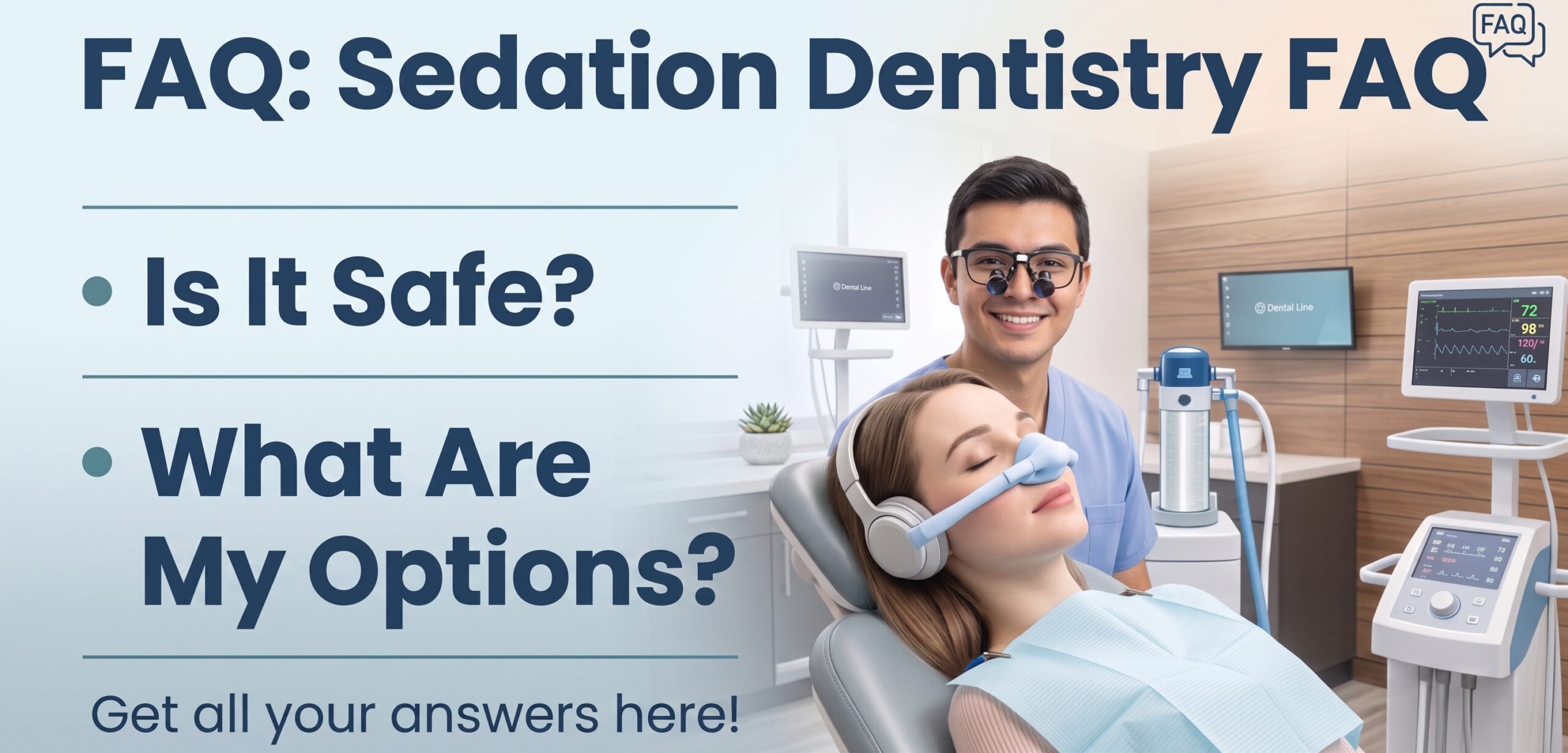
Most patients who search for sedation dentistry at Dental Line want a straight answer to two questions: is it actually safe, and which option is right for me. This FAQ answers both, plus the 13 other questions patients ask most, covering nitrous oxide, oral conscious sedation, IV sedation, candidacy, side effects, and what to expect before and after your appointment. For general anxiety-reduction measures and office protocols, see our Comfort and Safety page; for sedation specifically during implant treatment, see Dental Implants In Encino, CA.
1. Is Sedation Dentistry Safe?
Yes — sedation dentistry is safe when administered by a trained provider who follows established monitoring protocols and screens your medical history first. Every sedation level used in a dental office follows guidelines set by the American Dental Association, which specify required training, emergency equipment, and continuous monitoring (like pulse oximetry) depending on how deep the sedation goes. The real safety variable isn’t the medication itself; it’s whether your provider properly evaluates your health history and matches the sedation level to your specific case. (Source: ADA — Guidelines for the Use of Sedation and General Anesthesia by Dentists)
2. What Types of Sedation Dentistry Are Available?
Three main types of sedation are used in general dentistry: nitrous oxide, oral conscious sedation, and IV sedation, with each offering a different depth of relaxation. The right choice depends on your anxiety level, the length of the procedure, and your health history.
| Type | Depth | Onset / Duration | Best For |
| Nitrous Oxide | Minimal | Takes effect in 3–5 minutes; wears off within minutes | Mild anxiety and short procedures |
| Oral Conscious Sedation | Minimal to moderate | Taken 30–60 minutes before treatment; effects can last several hours | Moderate anxiety and longer procedures |
| IV Sedation | Moderate to deep | Takes effect quickly; continuously monitored during treatment | Severe anxiety and complex or lengthy procedures |
3. What Is Nitrous Oxide (Laughing Gas), and How Does It Feel?
Nitrous oxide is a mild sedative gas you inhale through a small nose mask, and it produces a light, calm, slightly floaty feeling within 3–5 minutes. You’ll stay fully conscious and able to talk and respond throughout the appointment; nitrous oxide is not designed to put you to sleep. Effects wear off within minutes of removing the mask, which is why it’s the only sedation option that lets most patients drive themselves home afterward. (Source: ADA MouthHealthy — Nitrous Oxide (Laughing Gas))
4. What Is Oral Conscious Sedation, and How Is It Different From Nitrous Oxide?
Oral conscious sedation uses a prescription pill, typically taken 30–60 minutes before your appointment, and produces a deeper, longer-lasting relaxation than nitrous oxide. Unlike nitrous oxide, which you inhale in the chair and clears in minutes, an oral sedative stays in your system for several hours. As a result, many patients doze off during treatment and have little to no memory of the procedure afterward. This makes it a common choice for patients with moderate dental anxiety or procedures that take longer than a routine cleaning.
5. What Is IV Sedation, and When Is It Used?
IV sedation delivers medication directly into the bloodstream and is the deepest level of sedation available in a general dental office setting. Because it’s administered intravenously, the effect is faster and the depth can be adjusted in real time throughout the procedure, with continuous monitoring of your vital signs. It’s typically reserved for patients with severe dental anxiety, complex procedures like multiple extractions or implant surgery, or cases where oral sedation alone isn’t enough.
6. How Do I Know Which Sedation Option Is Right for Me?
Your dentist matches your sedation option to your anxiety level, medical history, and the length and complexity of your procedure — not the other way around. A short cleaning with mild nervousness rarely needs more than nitrous oxide, while a multi-hour implant surgery on a patient with severe dental phobia may call for IV sedation. Bring your full medical history and current medications to your consultation, if you’re considering sedation, so your provider can rule out any interactions before recommending an option.
7. Will I Be Unconscious During Sedation Dentistry?
No — all three sedation levels used in a general dental office (nitrous oxide, oral, and IV) are forms of conscious sedation, meaning you remain able to breathe on your own and respond to verbal cues throughout. This is a meaningfully different category from general anesthesia, which fully suspends consciousness and is typically reserved for hospital or oral-surgery settings, not routine dental visits. Even with IV sedation — the deepest option offered in-office — you’ll still be able to respond if the dental team speaks to you or asks you to move.
8. What Are the Side Effects of Dental Sedation?
The most common side effects are drowsiness, grogginess, mild nausea, and dry mouth, and they scale with how deep the sedation level is. Nitrous oxide side effects are the mildest and resolve within minutes (occasionally light-headedness or nausea during administration). Oral and IV sedation carry a longer grogginess window that can last several hours, plus a small risk of headache or temporary memory gaps immediately after treatment. Serious complications are rare when sedation is administered and monitored according to established protocols. (Source: ADA — Guidelines for the Use of Sedation and General Anesthesia by Dentists)
9. Who Should Avoid Sedation Dentistry?
Patients with certain uncontrolled respiratory conditions, some heart conditions, pregnancy (for anything beyond nitrous oxide in specific cases), or interacting medications may need to avoid or modify standard sedation options. This is exactly why a full medical history review happens before any sedation is recommended. Conditions like severe sleep apnea, certain lung diseases, or specific drug interactions can change which option (if any) is appropriate. Tell your dentist about every medication and supplement you take, if you’re considering sedation, since even common medications can interact with sedative drugs.
10. Can Children Have Sedation Dentistry?
Yes — nitrous oxide and, less commonly, oral sedation are both used for children, and research shows nitrous oxide is highly effective for mild pediatric dental anxiety. A systematic review found nitrous oxide achieved 85–92% efficacy for mild anxiety in children with a complication rate under 5%, while oral sedation showed better results for moderate anxiety cases. Pediatric sedation always uses lower doses calibrated to a child’s weight and is monitored more closely than adult sedation.
11. Do I Need Someone to Drive Me Home After Sedation?
You need a driver for oral conscious sedation and IV sedation, but most patients can safely drive themselves home after nitrous oxide alone. Because oral and IV sedatives stay active in your system for hours, driving under their effects carries the same risk as driving impaired. Plan for a family member or rideshare in advance if your treatment plan involves either option. Nitrous oxide is the exception since it clears from your system within minutes of the mask coming off.
12. How Long Does It Take to Recover From Sedation?
Nitrous oxide recovery takes minutes; oral and IV sedation recovery typically takes several hours, with lingering grogginess sometimes lasting the rest of the day. Plan to take it easy for the remainder of the day after oral or IV sedation. Avoid driving, operating machinery, or making important decisions until the medication has fully cleared your system, usually by the next morning. Most patients feel completely normal within 24 hours regardless of which sedation option was used.
13. Does Insurance Cover Sedation Dentistry?
Coverage varies by plan and is usually tied to medical necessity rather than anxiety alone, with nitrous oxide more commonly covered than oral or IV sedation. Many PPO dental plans partially cover sedation when it’s billed alongside a covered procedure, such as an extraction or implant placement, but rarely cover sedation requested purely for comfort on a routine cleaning. Dental Line accepts most PPO dental insurance plans and offers financing options — check current Fixed Packages & Discounts or ask your treatment coordinator to verify your specific sedation benefit before your appointment.
14. What Should I Do to Prepare for a Sedated Appointment?
Arrange a driver in advance, follow any fasting instructions your dentist gives you, and wear comfortable, loose clothing to your appointment. For oral or IV sedation, most offices ask you to avoid food for several hours beforehand to reduce nausea risk, and to skip alcohol the day before your visit. Confirm your current medication list with your dentist ahead of time, if you take any daily prescriptions, since some may need to be paused or timed around your sedation appointment.
15. What Questions Should You Ask Before Choosing Sedation?
Ask which sedation level matches your anxiety and procedure, what monitoring will be used, and what the recovery plan looks like before you commit to an option. Specific questions worth bringing to your consultation include:
- Which sedation level do you recommend for my specific procedure and anxiety level?
- What monitoring equipment will be used during my sedation?
- Do any of my current medications or health conditions change what’s safe for me?
- Will I need a driver, and how long should I plan to rest afterward?
- What is included in the cost, and what does my insurance cover?
A dentist who walks through each of these clearly (not just “we offer sedation”) is giving you enough information to make a genuinely informed decision. See Who Places Dental Implants? [Specialists Guide] for how sedation fits into a larger implant treatment plan.
Conclusion
Dental anxiety is one of the most common reasons people delay care until small problems become bigger, more expensive ones. Sedation dentistry closes that gap safely: nitrous oxide for mild nerves and quick visits, oral sedation for moderate anxiety or longer procedures, and IV sedation for severe anxiety or complex treatment, all delivered as conscious sedation, monitored, and matched to your specific health history. Dental Line in Encino builds every sedation plan around your medical history and comfort level, not a one-size-fits-all default. If anxiety has been keeping you out of the dentist’s chair, the next step is a conversation, not another postponed appointment; Make an Appointment to talk through your options.
| READY TO TALK THROUGH YOUR OPTIONS?
Dr. Irena Starchenko will review your health history and help determine the appropriate sedation level during your consultation. Read what other Dental Line patients say on our Make an Appointment at Dental Line in Encino, or call (747) 265-6179. |