
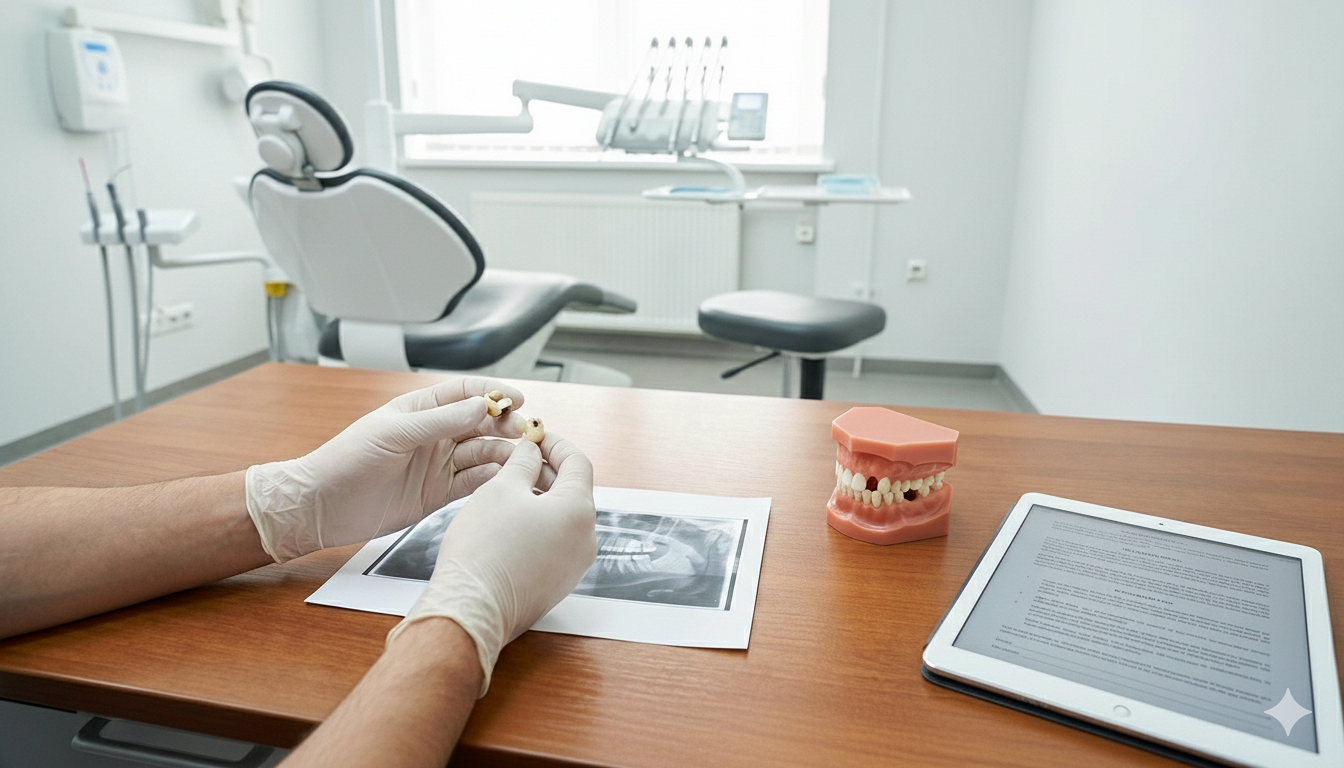

A “failed” crown simply means a restoration no longer protects or restores the tooth as intended — it might feel loose, chip or crack, cause pain, or allow decay to form along the margin. Whether a dentist is responsible depends on the cause, when the crown was placed, and whether the care met accepted clinical standards. This guide walks through realistic life expectancy, common reasons crowns fail, immediate steps you can take, and how liability is typically evaluated. You’ll also find practical repair and replacement options for Dental Crowns in Encino, and how Dental Line and Dr. Irena Starchenko diagnose and resolve these issues. By the end, you’ll know the warning signs, short-term triage, and reasonable next steps for repair, warranty review, or further evaluation.
What Are Dental Crowns and How Long Should They Last?
A dental crown is a custom-made cap that covers the visible part of a tooth to restore shape, strength, and appearance. Crowns help spread chewing forces and protect weakened tooth structure, lowering the risk of fracture and improving function. Material choice and a precise fit are the biggest factors that determine how long a crown lasts and how natural it looks. The table below summarizes common crown materials, expected lifespans, and performance traits so you can weigh durability versus esthetics.
| Material Type | Typical Lifespan | Strength / Esthetics |
|---|---|---|
| Porcelain (Fused-to-Metal or All-Porcelain) | 5–15 years | Very natural appearance with moderate strength; more susceptible to chipping under heavy bite forces |
| Zirconia | 10–20+ years | Extremely strong with good esthetics; well suited for posterior teeth under heavy load |
| Ceramic (e.g., Lithium Disilicate) | 8–15 years | Excellent esthetics and reliable strength for anterior and select posterior applications |
| Gold / Metal Alloy | 15–30+ years | Exceptional durability and margin accuracy; less esthetic in visible areas |
This comparison shows how material choice balances appearance and longevity — and why selecting the right material matters to expected life span. The next section explains the other factors that affect how long a crown will last.
Generally, crowns last roughly 5 to 15+ years depending on material, bite forces, and the oral environment; modern zirconia often reaches the high end of that range with proper care. Lifespan shortens with poor oral hygiene, bruxism (tooth grinding), a misfit or cement failure, and untreated decay at the margin. Regular check-ups, night guards for grinding, and early attention to sensitivity can all extend crown life and prevent premature failure. These practical prevention steps are covered below.
What Is a Dental Crown and Its Purpose?
A dental crown is a restoration that encases a damaged or weakened tooth to restore function and appearance while protecting the remaining tooth. Crowns are commonly used after large fillings, root canal therapy, fractured teeth, or when wear compromises strength. By distributing occlusal forces across the prepared tooth and any core buildup, crowns reduce point stress that could cause further breakage. For patients, crowns mean better chewing, protection of tooth roots, and a restored smile; for dentists, crowns preserve tooth structure and help avoid extractions. Proper preparation and cementation are essential to prevent failure — which is why diagnosis and planning are central to successful restorative work.
How Long Do Dental Crowns Typically Last?
Expect lifetime estimates to vary by material and patient habits: porcelain and ceramic crowns commonly last 5–15 years, zirconia often lasts 10–20+ years, and gold crowns can endure 15–30+ years under ideal conditions. Longevity depends on quality of tooth preparation, the fit of the margins, occlusal forces like grinding, and ongoing hygiene to prevent decay. You can maximize crown life by cleaning carefully around the margin, wearing a night guard if you grind, avoiding very hard foods, and keeping regular dental visits for early problem detection. These simple habits help reduce the chance of premature failure.
What Causes Dental Crowns to Fail?
Crowns fail for mechanical, biological, or material reasons. The most common causes are recurrent decay under the margin, cementation failure or poor fit, fractures of the crown or the underlying tooth, trauma, and gum disease that undermines support. Each cause shows different symptoms and calls for different immediate actions and long-term solutions. The table below links typical causes with their context, signs to watch for, and what you should do right away.
Mapping causes to actions helps show that not every failure equals negligence — many failures stem from biology or patient factors. Knowing the difference prepares you for the repair versus replacement decisions that follow.
Common Causes of Failed Dental Crowns
Decay beneath or around a crown happens when bacteria get past the margin — often due to imperfect seals or lapses in hygiene — and this undermines the prepared tooth. Cementation problems or a poor fit allow micro-movement that weakens retention over time. Material fractures (chips or cracks) usually result from overload, grinding, or trauma and affect both function and appearance. Periodontal disease or a fractured root can destabilize the tooth entirely, sometimes requiring periodontal care or extraction. A careful diagnosis distinguishes material failure from biological progression and guides whether repair, re-cementation, or full replacement is the right move.
What Are the Signs and Symptoms of a Failing Crown?
Early signs include temperature sensitivity, pain when biting, or a feeling that the crown is loose. A persistent metallic or cement taste, bad breath, or visible chips are also red flags. Clinically, dentists check for marginal gaps, recurrent decay on radiographs, unresolved pulp issues, and tooth mobility. Catching problems early often allows simpler fixes like re-cementing or small repairs; advanced decay or root fracture usually means replacement or endodontic treatment. Spotting symptoms quickly gives you the best chance of a conservative solution.
What Should You Do If Your Dental Crown Breaks or Fails?
Quick triage, preserving the crown if possible, and contacting your dentist are the best first steps to limit further damage and pain. Short-term measures reduce the risk of tooth fracture or infection and provide useful information for the dental team. The list below outlines the usual clinician-recommended sequence for initial care.
- Preserve the crown: If it came off intact, place it in a clean container and bring it to your appointment.
- Avoid chewing on the affected side: This prevents further damage to the tooth or nearby restorations.
- Manage pain and sensitivity: Over-the-counter pain relievers and a cold compress can help until you get seen.
- Temporary re-cementing options: Over-the-counter temporary dental cement can stabilize a loose crown short-term — follow instructions carefully.
- Contact your dental office promptly: Share the date the crown was placed, your symptoms, and whether you kept the crown.
Immediate Steps to Take After Crown Failure
Focus on preserving oral health and stabilizing the area: keep the crown if intact, rinse gently, and avoid poking at fragments. If you use temporary dental cement, follow the product directions to avoid trapping bacteria or causing damage; if not, leave the tooth uncovered but don’t chew on that side. Photographing the area and noting the timeline since placement helps with clinical records and any warranty discussions. Call your dental provider quickly — timely imaging and an exam often allow less invasive fixes like re-cementing. These steps prepare you for the diagnostic path that decides repair versus replacement.
What Are Your Dental Crown Repair and Replacement Options in Encino?
Diagnosis usually includes a clinical exam, bite assessment, and imaging such as digital x-rays. Those steps determine whether a crown can be re-cemented, repaired, or needs replacement. Re-cementation works when the crown is intact and the underlying tooth is sound; minor chips can sometimes be smoothed or bonded with composite. Replacement is required for extensive material failure, recurrent decay, or compromised tooth structure — and may involve switching to a stronger material like zirconia. In Encino, many practices offer timely assessments and same-day re-cementing when appropriate; Dental Line provides restorative evaluations and will guide you toward the most conservative, long-lasting option. Knowing the likely steps helps you prepare for treatment and expected timelines.
Is the Dentist Legally Responsible for a Failed Crown?
Legal responsibility depends on whether the dentist followed the accepted standard of care in diagnosis, preparation, material selection, and cementation, and whether the failure is due to normal wear or negligence. Not all failures are malpractice — expected wear, patient noncompliance, and biological progression usually aren’t the dentist’s fault. If you have concerns, gather documentation — treatment dates, photos, radiographs, and a clear timeline of symptoms — before raising the issue. The table below outlines typical resolution paths, timelines, what they usually cover, and how to pursue them.Research into dental malpractice commonly points to procedural errors as a frequent cause of litigation.Dentists’ Legal Liability in Malpractice LitigationThis study examined factors linked to dentists’ legal liability in malpractice cases — noting that dental claims make up a meaningful share of medical litigation in some regions, often involving procedural negligence.Dentists’ legal liability and duty of explanation in dental malpractice litigation in Japan, T Hamasaki, 2021This framework shows that most problems begin with in-office evaluation and only escalate to insurance or legal routes when evidence points to negligence. Understanding these paths helps you ask the right questions and gather the right evidence.
Understanding Dentist Liability for Failed Dental Work
Liability is judged against the “standard of care” — what a reasonably competent dentist would do under similar circumstances. Signs a dentist may be responsible include persistent poor marginal fit, incorrect occlusal adjustment creating overload, failure to diagnose decay or root problems before placing a crown, or use of defective materials without disclosure. If you suspect substandard work, collect dates, photos, prior x-rays if available, and written symptom notes; these form the basis for discussion with your provider or, if needed, legal counsel. Remember many failures come from biological progression or patient factors, so objective evidence and professional assessment are essential to determine responsibility. This naturally leads into practice warranty policies and patient rights.In some cases, failing to recommend a crown after root canal treatment is cited as a direct example of clinical negligence.Dentist Liability for Negligence & Crown RecommendationsPrimary tortious liability can arise when a dentist fails to perform or recommend standard treatments — for example, not advising a crown after root canal therapy when indicated.Legal aspects in dentistry, R Dhawan, 2010
What Are Dental Crown Warranty Policies and Patient Rights?
Many dental practices offer warranties or guarantees that differ by office; these typically cover lab defects or clinically related failures within set timeframes. Warranties usually require prompt reporting, documentation, and routine care; they often call for repair first and replacement if repair isn’t possible. When filing a claim, provide your documentation, treatment dates, and any images, and ask for the practice’s policy in writing. Dental Line emphasizes patient-focused resolution — we encourage open discussion of warranty details during evaluation so you understand your options and any applicable fees. Clear communication and records are the fastest route to a fair outcome when warranty coverage or disputed failures arise.Expectations about crown longevity and warranty coverage vary between patients and providers, so upfront conversation is key.Attitudes on Crown Warranties and LongevitySurveys show differences between dentists, students, and patients on expected restoration longevity and warranty length — with patients generally expecting longer coverage and clinicians favoring defined warranty terms, often triggered by mechanical failure.Attitudes regarding a warranty and the expected longevity of dental treatment amongst New Zealand dentists, dental students, and patients: a mixed methods survey, 2024
How Does Dental Line and Dr. Irena Starchenko Address Failed Crowns?
At Dental Line, we handle failed crowns with step-by-step diagnosis, clear communication, and a focus on durable restorative solutions. leads our restorative care with an emphasis on patient comfort and evidence-based material choices to reduce recurrence. We use advanced diagnostic tools and a methodical treatment plan to restore function and esthetics while addressing the root cause of failure. That means you’ll get a clear explanation of options, realistic timelines for repair or replacement, and a patient-first approach that favors conservative measures when appropriate.
Dental Line’s Commitment to Quality and Patient Satisfaction
prioritizes clear communication, documented follow-up, and individualized plans when addressing crown failures. Our team records findings, discusses whether re-cementing, repair, or replacement is best, and explains how insurance or payment options apply. We accept most PPO plans and offer flexible payment arrangements to help you receive timely restorative care. Patient comfort — including sedation options when indicated — is a priority. This focus on transparency and follow-up supports better long-term results and helps you navigate warranty or repair questions with confidence.
Advanced Technology and Expertise in Restorative Dentistry
To reduce failure risk, Dental Line uses technologies such as digital x-rays and CBCT 3D imaging for accurate diagnosis, along with modern materials like zirconia for long-lasting crowns. Precise imaging improves detection of decay or root issues, while digital workflows enhance marginal fit and occlusal accuracy. Dr. Starchenko combines thoughtful material selection with clinical technique to lower common failure modes like marginal leakage and fracture. These clinical and technological strategies make repairs and replacements more predictable and durable when needed.
How Can You Schedule a Consultation for Dental Crown Issues in Encino?
If you’re having crown problems, that includes an exam and imaging — that’s the first step toward relief. When you call, tell us the date your crown was placed, describe your symptoms, and let us know if you saved the crown. This helps us prioritize imaging and determine whether same-day re-cementing might be possible. Below is a quick checklist of what to have ready and what to expect at your visit.
- Contact details to provide: Symptom timeline, date of crown placement, and whether you retained the crown.
- Documentation to bring: Photos, prior x-rays if available, and any notes or correspondence about the original treatment.
- Urgency indicators: Severe pain, swelling, or exposed root/tooth structure should be flagged as urgent.
How to Contact Dental Line for Crown Repair or Replacement
For local patients in Encino, Dental Line schedules consultations at our Encino office. Call (747) 265-6179 to arrange an appointment or triage urgent issues. Our address is 18024 Ventura Blvd, Encino, CA 91316. When you call, mention whether you retained the crown and any pain or swelling — that helps our team prioritize imaging and care. Emergency triage and scheduled consults are handled based on symptom severity, with urgent pain or infection expedited for faster assessment.
What to Expect During Your Appointment with Dr. Starchenko
At your consultation with , expect a focused exam including visual inspection, digital x-rays or CBCT if needed, and an occlusal assessment to pinpoint the cause of failure. We’ll review diagnosis, discuss repair versus replacement options, outline timelines, and explain how insurance or payment plans may apply. If re-cementing is appropriate, we can often do that the same day. Comfort options, including sedation when indicated, will be reviewed so your experience is as stress-free as possible. The visit ends with clear documentation and a follow-up plan so you know the next steps and expected outcomes.
Frequently Asked Questions
What should I do if my dental crown feels loose?
If your crown feels loose, avoid chewing on that side and keep the crown if it has come off — place it in a clean container. Call your dentist right away so they can assess whether the crown can be re-cemented or if other treatment is needed. Prompt care helps prevent decay or further damage to the underlying tooth.
Can I eat normally with a loose crown?
Not safely. Avoid chewing on the affected side, and stick to soft foods until you see your dentist. Steer clear of sticky or very hard items that could dislodge the crown entirely. If you have pain, over-the-counter pain relief can help until your appointment.
How can I prevent my dental crown from failing?
Good prevention starts with excellent oral hygiene — brush twice daily and floss carefully around the . Keep regular dental check-ups, avoid biting very hard foods, and wear a night guard if you grind your teeth. Addressing small problems early gives crowns a much better chance of lasting.
What are the costs associated with crown repair or replacement?
Costs vary by material, complexity, and insurance. Repairing a crown is usually less expensive than replacing it, but each case differs. Check your dental insurance for coverage details and discuss estimates and payment options with your dentist before treatment.
Are there any risks associated with dental crown procedures?
Like any procedure, crowns carry some risks: temporary sensitivity, discomfort during treatment, or rare allergic reactions to materials. Poor fit can increase the chance of decay under the crown or gum inflammation. Discuss concerns with your dentist so risks are minimized and you’re informed about the process and aftercare.
How often should I have my dental crowns checked?
Have crowns checked at least once a year during routine dental exams. Regular visits let your dentist evaluate wear, check for decay, and ensure the crown is functioning properly. If you notice sensitivity, looseness, or other changes, schedule an appointment sooner — early detection often avoids more extensive work.
Conclusion
Knowing what causes crowns to fail and how to respond helps you protect your oral health and get timely care. If you live in Encino, Dental Line offers focused restorative services to diagnose the cause and recommend the most conservative, long-lasting solution. Schedule a consultation to review your crown concerns and get a personalized plan for repair or replacement.