
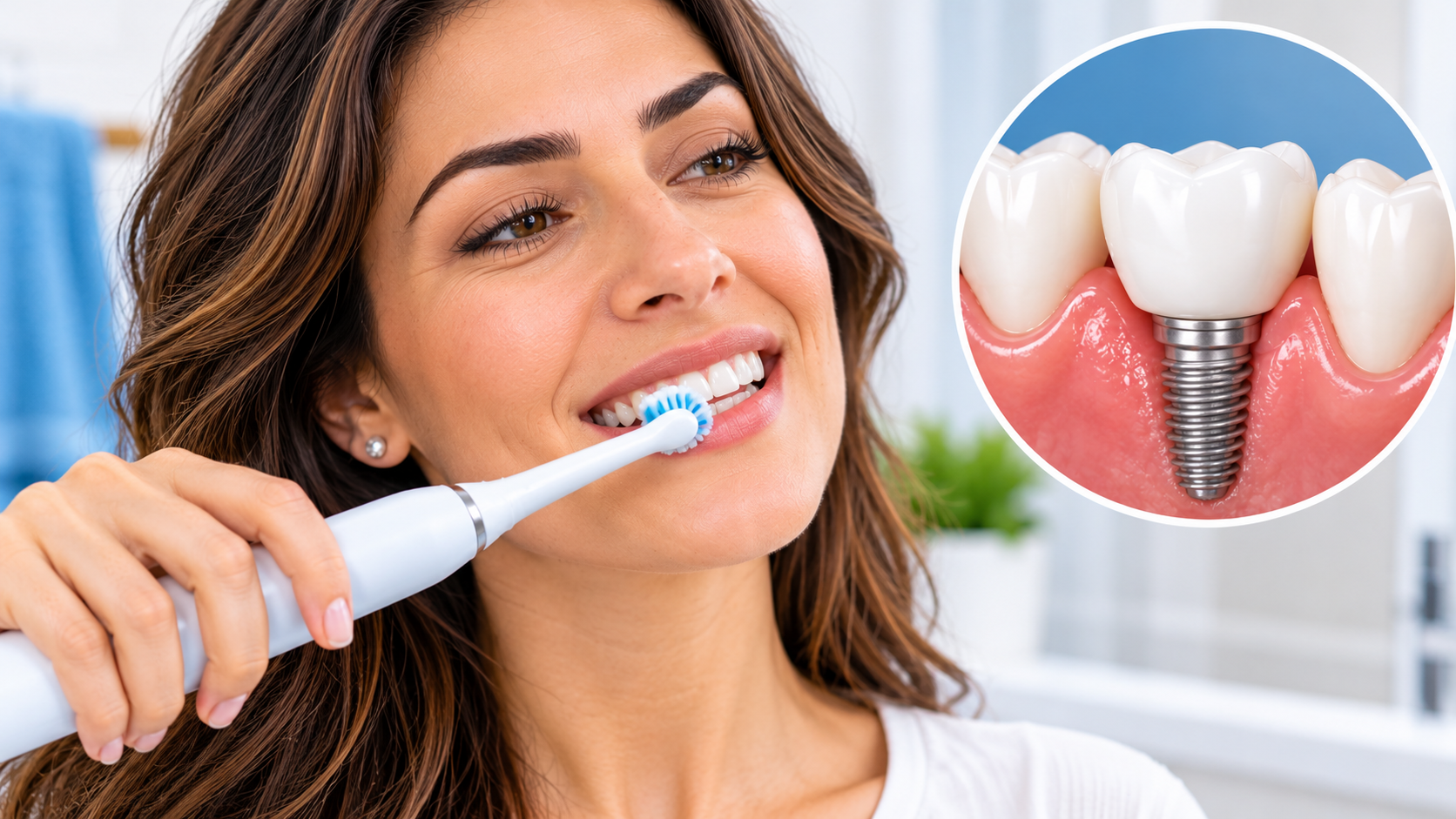

Yes. You can use an electric toothbrush on dental implants once the surgical site has healed, and for many people it cleans the gumline around an implant crown better than a manual brush. Choose a soft brush head, use light pressure, and guide the brush slowly along the gums rather than scrubbing. In the first days after surgery, keep the brush away from the implant site until your dentist clears you.
The vibration of an electric toothbrush will not loosen a healed implant. Once the implant has fused with the jawbone, it is anchored far more firmly than a brush can move. The real risks come from pressing too hard, using a stiff brush head, or brushing a fresh surgical site too soon.
At Dental Line, implant patients in Encino often ask whether they need to give up their electric toothbrush. This article covers when you can start using one after surgery, which type works best, and how to clean around an implant crown so it stays healthy for the long run.
Is an Electric Toothbrush Safe for Dental Implants?
An electric toothbrush is safe for dental implants that have healed. Both sonic and oscillating-rotating brushes remove plaque from implant crowns without harming the implant, the abutment, or the crown material.
A dental implant is a titanium post that fuses with the bone over a few months, a process called osseointegration. The abutment connects the post to the crown, and the crown is made from durable materials such as porcelain or zirconia. None of these parts is damaged by the gentle motion of a quality electric toothbrush.
What can cause harm is technique. Pressing hard with any brush can irritate the gums around the implant, and stiff bristles or abrasive toothpaste can dull the surface of a crown over time. If you are still planning your treatment, our page on dental implants in Encino explains how each part of the implant is placed and restored.
Why Cleaning Around an Implant Matters So Much
An implant cannot get a cavity, but the gum and bone around it can still become infected. A natural tooth is attached to the bone by a periodontal ligament, while an implant relies on a tight seal of gum tissue. That seal is less resistant to bacteria, so plaque left at the gumline can cause inflammation more easily.
The American Academy of Periodontology lists poor plaque control as a risk factor for peri-implant disease and recommends regular brushing, flossing, and dental checkups to keep implants healthy. Peri-implant mucositis, the early stage, causes red, tender, or bleeding gums around the implant. Left untreated, it can progress to peri-implantitis, which damages the bone that holds the implant in place.
This is where an electric toothbrush helps. Its steady motion and built-in timer make it easier to clean the gumline thoroughly every time, which is the area that matters most around an implant.
When Can You Use an Electric Toothbrush After Implant Surgery?
Most patients can return to an electric toothbrush on the implant side once the gums have closed, often around two weeks after surgery. Until then, the goal is to keep the rest of your mouth clean without disturbing the healing site. The American Association of Oral and Maxillofacial Surgeons advises avoiding vigorous tooth brushing and rinsing after implant surgery, since these can disrupt clotting and the healing process.
| Time after surgery | What to do |
|---|---|
| Day of surgery | Do not brush the surgical site. Avoid rinsing and spitting. |
| Days 1 to 7 | Brush your other teeth normally. Clean near the implant only as your dentist directs, often with a gentle salt water rinse. |
| Weeks 1 to 2 | A soft manual brush can usually be used gently near the site once it feels comfortable. |
| About 2 weeks and later | Most patients can return to an electric toothbrush on a low or sensitive setting once the gums have closed. |
| After the final crown | Brush the implant crown like a natural tooth, with a soft head and light pressure. |
Your dentist may give a different timeline after a bone graft, several implants, or a full-arch procedure. Our guide to what to avoid after dental implant surgery covers the other habits that can slow healing in those first weeks.
Sonic vs. Oscillating Toothbrushes for Implants
Both sonic and oscillating-rotating electric toothbrushes work well for dental implant care. Neither type has a clear clinical advantage for implants, so the best choice is the one you will use gently and consistently.
| Feature | Sonic toothbrush | Oscillating-rotating toothbrush |
|---|---|---|
| How it moves | Side-to-side vibrations at very high speed | A small round head that rotates back and forth |
| Head shape | Long and narrow, like a manual brush | Small and round, cups one tooth at a time |
| Feel on the gums | Often described as gentler | Can feel more intense at first |
| Best for | Sensitive gums, long rows of teeth, implant bridges | Cleaning one tooth or crown at a time |
| What to watch for | Do not press; let the vibration do the work | Keep pressure light; use a sensitive head |
Sonic toothbrush implant care suits many patients with sensitive gums, because the brush cleans with fast vibration rather than scrubbing. Patients who like the feeling of polishing each tooth individually often prefer an oscillating head.
What to Look For in an Electric Toothbrush for Implants
The best electric toothbrush for implants is one with soft bristles and features that keep pressure under control. Look for:
- A soft or sensitive brush head. Soft bristles clean the gumline without irritating the tissue around the implant.
- A pressure sensor. A light or vibration change warns you when you press too hard.
- A two-minute timer. Built-in timers help you spend enough time on every area, including the implant.
- A gentle or sensitive mode. A lower setting is useful in the weeks after surgery and for tender gums.
- A small head option. A compact head reaches the back of the implant crown and tight spaces more easily.
Replace the brush head every three months, or sooner if the bristles look frayed. Worn bristles clean poorly and can be harsher on the gums.
How to Brush Around an Implant Crown With an Electric Toothbrush
Cleaning around an implant crown takes the same two minutes as brushing your natural teeth, with a little extra attention at the gumline. Follow these steps twice a day:
- Use a pea-sized amount of low-abrasion toothpaste. Spread it across your teeth before turning the brush on to avoid splatter.
- Angle the bristles toward the gums. Hold the head at about 45 degrees so the bristles reach where the crown meets the gum.
- Glide, do not scrub. Move slowly from tooth to tooth and let the brush do the work. Pause for a few seconds on each side of the implant crown.
- Clean every surface. Brush the cheek side, the tongue side, and the chewing surface of the crown.
- Keep pressure light. If your pressure sensor lights up, ease off.
- Spit, but do not rinse right away. Leaving a thin layer of toothpaste on your teeth gives the fluoride more time to protect your natural teeth.
Cleaning Between and Under Your Implants
A toothbrush cannot reach between teeth, so cleaning between and under implants is just as important as brushing. Clean these areas once a day with one or more of these tools:
- Interdental brushes. Small brushes that slide between teeth. Choose plastic-coated or rubber-tipped versions to avoid scratching the implant.
- Implant floss or super floss. Thicker, spongy floss that cleans around the base of the crown and under implant bridges.
- A water flosser. A pulsing stream of water that flushes plaque from under bridges and implant-supported dentures. It works best alongside brushing, not instead of it.
- An end-tuft brush. A small brush with a single tuft of bristles that is ideal for tracing the gumline around a single implant crown or the last tooth in a row.
Patients with an implant bridge or an implant-supported denture often find a water flosser and super floss the easiest way to clean underneath the prosthesis.
Choosing a Toothpaste for Dental Implants
The right toothpaste for dental implants is a low-abrasion fluoride paste. Highly abrasive products can wear down the surface of a crown over time and leave tiny scratches where plaque collects more easily.
Avoid using these regularly on implant crowns:
- Whitening toothpaste with strong abrasives
- Charcoal toothpaste
- Products with heavy baking soda or gritty particles
Fluoride still matters, since it protects the natural teeth next to your implant. Our guide to the best toothpaste for dental implants explains which ingredients to look for and which to skip.
Professional Cleanings for Implant Patients
Even with excellent home care, dental implants need professional cleanings to remove hardened tartar that a toothbrush cannot. Most patients should schedule a cleaning every six months, and some implant patients benefit from more frequent visits, especially with a history of gum disease.
During an implant cleaning, the hygienist uses instruments that are safe for implant surfaces, checks the gums around the implant for inflammation, and looks at the crown and bite. Our professional teeth cleaning visits in Encino also give you a chance to ask about brushing technique and the tools that suit your implant.
Signs Your Implant Needs a Dentist’s Attention
Good home care prevents most problems, but call your dentist if you notice any of these signs:
- Gums around the implant that bleed, look red, or feel tender
- Swelling, pus, or a bad taste near the implant
- Gum tissue pulling back from the crown
- A crown that feels loose or moves when you bite
- Pain or pressure around an implant that had been comfortable
A loose crown is usually caused by a loose screw or abutment rather than the implant itself, and it is not caused by your toothbrush. Either way, it should be checked promptly.
Frequently Asked Questions
Can an electric toothbrush loosen a dental implant?
No. A healed implant is fused to the jawbone and cannot be loosened by the vibration of an electric toothbrush. If an implant crown feels loose, the cause is usually a loose screw or abutment, which a dentist can tighten or repair.
Is a sonic toothbrush better than an oscillating one for implants?
Neither is clearly better for implants. Sonic brushes often feel gentler on sensitive gums, while oscillating brushes clean one tooth at a time. Choose the one you find comfortable and will use twice a day with light pressure.
Do I need a special toothbrush for dental implants?
No special implant toothbrush is required. A soft-bristled manual or electric toothbrush works well. Many patients add an end-tuft brush or interdental brushes to clean the gumline and the spaces next to the implant.
Can I use whitening toothpaste on dental implants?
It is best to avoid abrasive whitening toothpaste on implant crowns. Crowns do not whiten the way natural teeth do, and strong abrasives can dull their surface. A low-abrasion fluoride toothpaste is the safer everyday choice.
Can a water flosser replace brushing around an implant?
No. A water flosser is a helpful extra, especially under bridges and implant dentures, but it does not remove the plaque film the way bristles do. Use it in addition to brushing twice a day.
How often should I replace my electric toothbrush head?
Replace the brush head about every three months, or sooner if the bristles splay or look worn. Fresh bristles clean better and are gentler on the gums around your implant.
Keep Your Implant Healthy With Our Encino Team
An electric toothbrush is one of the easiest ways to keep a dental implant clean, as long as you wait for the site to heal and brush gently. Combined with daily interdental cleaning and regular professional cleanings, it protects the gums and bone that hold your implant in place. If you want a personal implant care routine or a checkup on an existing implant, book an appointment with our team or call (747) 265-6179 to visit our office at 18024 Ventura Blvd in Encino.