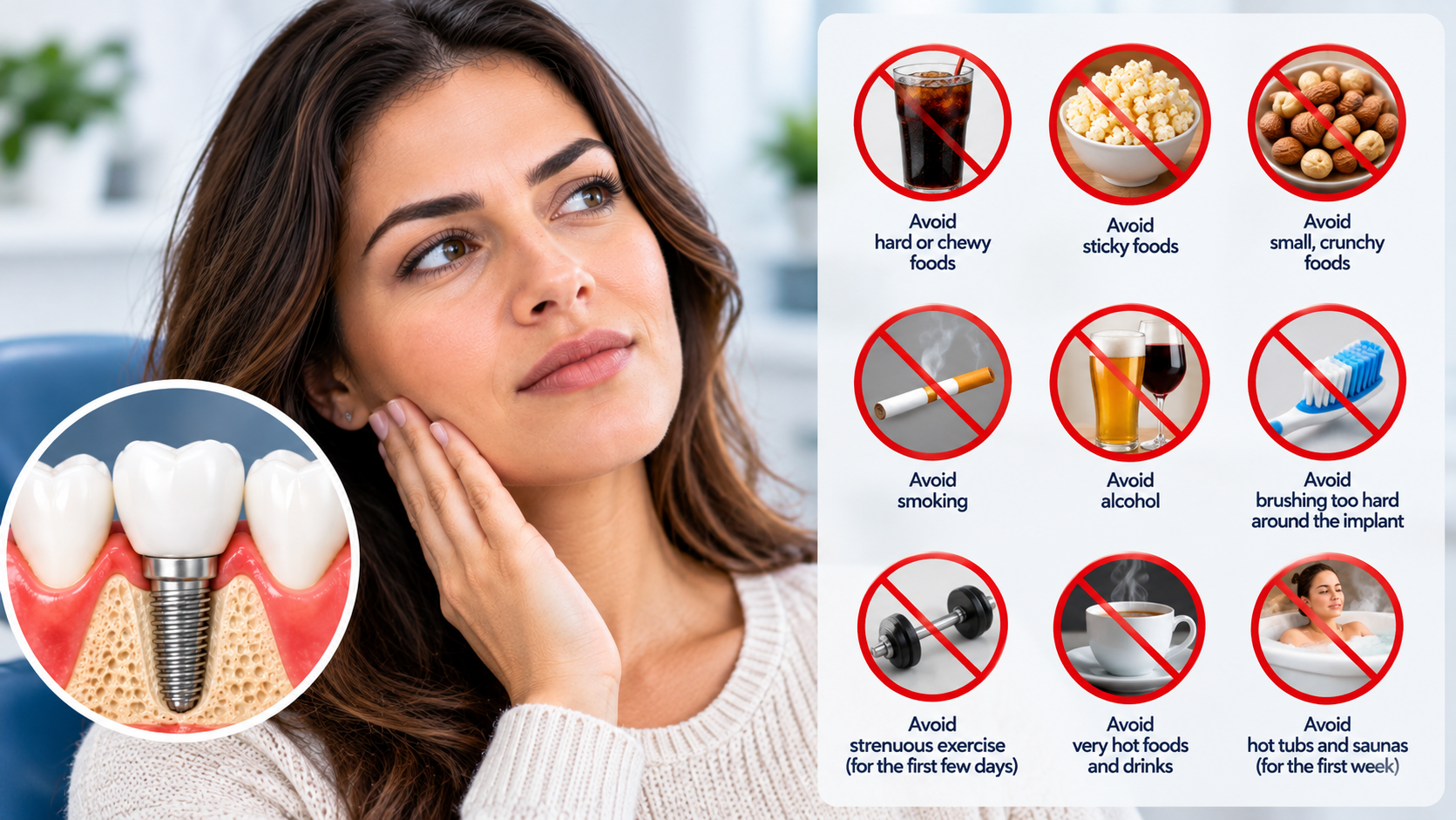

After getting dental implants, avoid smoking, drinking through a straw, alcohol, hot drinks, and hard, crunchy, sticky, or spicy foods while the site heals. Skip strenuous exercise for about a week, do not rinse or spit forcefully for the first day, and keep your tongue and fingers away from the implant. Most of these restrictions last a few days to two weeks, while smoking is best avoided for the whole healing period.
These rules protect two things. In the first days, they protect the blood clot and stitches that start the healing process. Over the following months, they protect osseointegration, the process in which the implant fuses with your jawbone.
At Dental Line, implant patients in Encino often ask what they can and cannot do after surgery, and the first two weeks of dental implant aftercare shape how well the implant heals. This article lists what to avoid, how long each restriction lasts, and what to do if you slip up.
What to Avoid After Dental Implants and for How Long
Most restrictions after dental implant surgery are short. The table below shows how long most patients avoid each one after a single, straightforward implant. Your dentist may extend these times after a bone graft, a sinus lift, or several implants.
| What to avoid | How long to avoid it |
|---|---|
| Rinsing, spitting, or brushing the surgical site | First 24 hours |
| Drinking through a straw | At least 3 to 7 days |
| Hot drinks and hot foods | Until the numbness wears off, then keep them warm, not hot, for 2 to 3 days |
| Carbonated drinks | First 2 to 3 days |
| Alcohol | At least 48 to 72 hours, and while taking prescription pain medicine or antibiotics |
| Smoking and vaping | At least 72 hours; ideally the full healing period of a few months |
| Spicy and acidic foods | About 1 week |
| Hard, crunchy, and sticky foods | About 2 weeks, and on the implant itself until the final crown is placed |
| Chewing on the implant side | Until your dentist clears you |
| Strenuous exercise and heavy lifting | About 1 week |
| Touching the site with your tongue or fingers | Until the gums have healed, about 2 weeks |
| Alcohol-based mouthwash | First 1 to 2 weeks |
Foods to Avoid After Dental Implant Surgery
The foods to avoid after implant surgery are the ones that can poke, stick to, or irritate the healing gums. For the first one to two weeks, skip:
- Hard and crunchy foods: chips, nuts, popcorn, pretzels, hard bread, raw carrots, and ice
- Sticky and chewy foods: caramel, taffy, gummy candy, chewing gum, and tough meats such as steak or jerky
- Small, sharp pieces: seeds, granola, and rice that can lodge in the surgical site
- Spicy foods: hot peppers, chili, and spicy sauces that sting healing tissue
- Acidic foods: citrus fruits, tomato sauce, and vinegar dressings that can irritate the gums
- Very hot foods: soups and dishes served straight off the stove
What to eat instead
Soft, cool, and lukewarm foods are easiest in the first days. Good choices include yogurt, smoothies eaten with a spoon, applesauce, scrambled eggs, mashed potatoes, oatmeal, soft pasta, and lukewarm soup. As the gums heal over the next two weeks, you can add softer proteins such as fish, ground meat, and tofu, and chew on the side opposite the implant.
Pizza crust, steak, and crunchy salads can usually return after about two weeks, as long as you chew them away from the implant until the final crown is in place.
Drinks to Avoid After a Dental Implant
What you drink matters as much as what you eat in the first few days. The American Association of Oral and Maxillofacial Surgeons advises avoiding carbonated beverages, drinking through a straw, and vigorous brushing and rinsing after implant surgery, since these can disrupt clotting and the healing process.
- Straws: The suction can pull the blood clot loose. Sip from a cup instead.
- Hot coffee and tea: Heat can increase bleeding and swelling, and you may not feel a burn while you are still numb. Let drinks cool to lukewarm for the first few days.
- Soda and sparkling water: Carbonation can irritate the site in the first days.
- Alcohol: It slows healing and should not be mixed with prescription pain medicine.
Water is the best choice. Staying hydrated helps your body heal and keeps your mouth comfortable.
Smoking After a Dental Implant
Smoking after a dental implant is the single habit most likely to cause problems. Smoking reduces blood flow to the gums and bone, slows healing, and raises the risk of infection and implant failure. The same concerns apply to vaping and other nicotine products, which also narrow blood vessels.
At a bare minimum, avoid smoking and vaping for 72 hours after surgery. The safest approach is to stop for the entire healing period, which usually lasts a few months, or to use implant surgery as a reason to quit for good. Smoking is also a long-term risk: the American Academy of Periodontology lists smoking as a risk factor for peri-implant disease, the gum and bone infection that can cause implants to fail years later.
“Light” smoking is not safe either. Even a few cigarettes a day affect blood flow to the healing site.
What to do if you already smoked after surgery
If you smoked after implant surgery, do not panic. One slip does not mean the implant will fail. Stop smoking now, keep the area clean as directed, and watch for warning signs such as increasing pain, swelling, a bad taste, or bleeding. Let your dentist know at your next visit or sooner if anything feels wrong, and ask about nicotine-free ways to get through the rest of the healing period.
Alcohol After Dental Implant Surgery
Avoid alcohol for at least 48 to 72 hours after dental implant surgery, and for as long as you are taking prescription pain medicine or antibiotics. Alcohol slows tissue healing, can increase bleeding, and should never be combined with opioid pain relievers. After that, drink in moderation and avoid alcohol-based mouthwash for the first week or two.
Strenuous Exercise and Heavy Lifting
Skip strenuous exercise and heavy lifting for about a week after dental implant surgery. Hard workouts raise blood pressure, which can cause throbbing, bleeding, and extra swelling at the site. Gentle walking is fine after a day or two. Our guide to how many days to rest after dental implant surgery walks through a staged return to work and the gym.
Oral Hygiene Mistakes to Avoid
Keeping the mouth clean is essential, but the wrong technique can disturb the site. Avoid these common mistakes:
- Brushing the surgical site too soon. Brush your other teeth normally, but leave the implant area alone for the first day and clean it only as directed after that.
- Rinsing hard or spitting forcefully. Let water fall out of your mouth gently for the first few days.
- Skipping cleaning altogether. Plaque buildup raises the risk of infection. Gentle salt water rinses after the first day help keep the site clean.
- Using alcohol-based mouthwash. It can sting and dry the healing tissue.
- Going back to an electric toothbrush too soon. Use a soft manual brush near the site until the gums close.
Once the site has healed, most patients can return to their usual routine. Our article on using an electric toothbrush on dental implants explains when to switch back and how to clean around the crown.
Other Habits to Avoid During Healing
A few small habits can slow healing without you noticing:
- Poking the site with your tongue or fingers. It can loosen stitches and introduce bacteria.
- Sleeping flat on the first night. An extra pillow helps limit swelling.
- Skipping medicine. Take antibiotics until they are finished and pain relievers as directed.
- Missing follow-up visits. Your dentist needs to check healing and remove stitches if needed.
Long-Term Habits That Can Damage Dental Implants
Once your implant has healed, a few habits are still worth avoiding for the life of the implant:
- Chewing ice, hard candy, or pens. Hard objects can chip or crack the crown.
- Using your teeth as tools. Opening packages or bottles strains the crown and abutment.
- Grinding or clenching without a night guard. Grinding overloads the implant and can loosen parts.
- Skipping cleanings and checkups. Hardened plaque around an implant can lead to infection.
- Returning to smoking. Smoking raises the long-term risk of gum and bone loss around the implant.
These habits are behind many late implant problems. Our article on the biggest complaint about dental implants explains how peri-implantitis develops and how to prevent it.
When to Call Your Dentist
Some soreness, swelling, and light oozing are normal in the first few days. Call your dentist if you notice:
- Pain or swelling that gets worse after the third day
- Bleeding that does not slow after 30 minutes of gentle pressure with gauze
- Fever, pus, or a bad taste that does not go away
- Numbness that lasts beyond the day of surgery
- An implant or temporary tooth that feels loose
Dental Implant Aftercare in Encino at Dental Line
Dental Line provides dental implants Encino patients can count on from our office at 18024 Ventura Blvd, with care led by Dr. Irena Starchenko, DDS. We plan each implant with advanced CBCT 3D scans, use premium Swiss Straumann implants, and offer sedation options for anxious patients. If something does not feel right during healing, we offer same-day appointments in most cases when you call in the morning, along with Sunday hours for urgent visits.
Frequently asked questions
How long after a dental implant can I smoke?
Avoid smoking for at least 72 hours, and ideally for the full healing period of a few months. Smoking slows healing and raises the risk of infection and implant failure. Quitting entirely gives your implant the best long-term chance.
Can I drink coffee after dental implant surgery?
Yes, but wait until the numbness wears off and let it cool to lukewarm for the first two to three days. Very hot coffee can increase bleeding and swelling. Drink it from a cup, not through a straw.
When can I eat normally after dental implants?
Most patients return to a mostly normal diet after about two weeks. Keep chewing hard or sticky foods away from the implant until your dentist places the final crown and confirms the implant has healed.
Can I drink alcohol after getting a dental implant?
Wait at least 48 to 72 hours, and do not drink while taking prescription pain medicine or antibiotics. Alcohol slows healing and can increase bleeding. After that, moderate drinking is fine for most patients.
Can I use mouthwash after dental implant surgery?
Avoid rinsing for the first 24 hours. After that, use gentle salt water rinses or an alcohol-free mouthwash your dentist recommends. Skip alcohol-based mouthwash for the first one to two weeks.
What happens if I accidentally eat something hard after an implant?
One bite of something hard is unlikely to ruin the implant. Rinse gently, check for bleeding, and go back to soft foods. Call your dentist if you notice pain, bleeding, or a loose feeling around the implant.
Protect Your Implant With Guidance From Our Encino Team
Avoiding a few foods, drinks, and habits for a short time gives your implant the best start, and steady long-term care keeps it healthy for years. If you are planning implant treatment or have questions while you heal, book an appointment with our Encino team or call (747) 265-6179.