
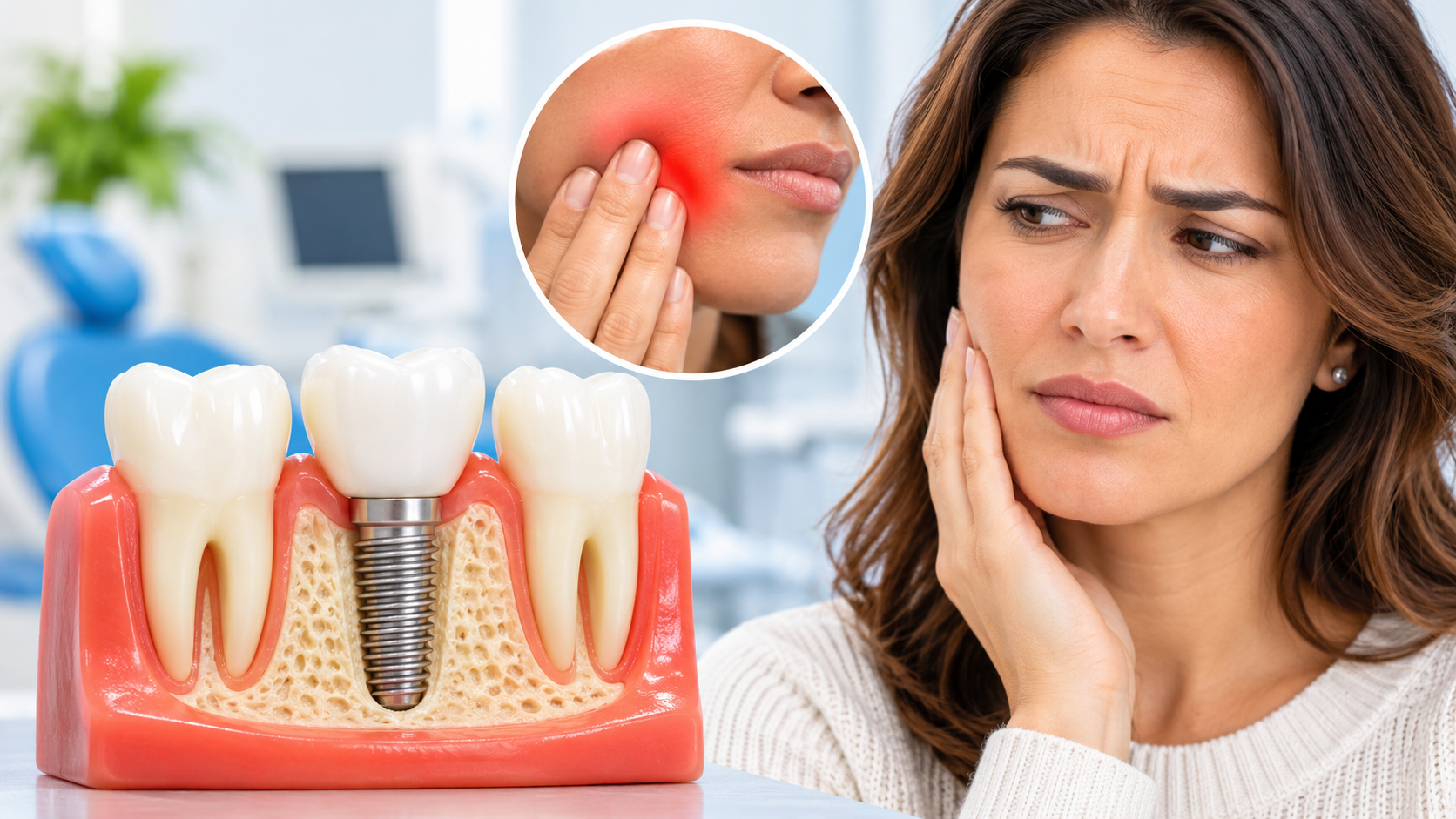

The biggest complaint about dental implants is an implant that becomes sore, inflamed, or loose months or years after treatment, usually because of an infection around the implant called peri-implantitis. Cost and the months-long timeline are the complaints patients mention most often, but late failure is the one that turns a good investment into regret. Most of these dental implant problems trace back to causes you and your dentist can control.
At Dental Line, we hear these concerns from patients in Encino and across the San Fernando Valley. Some have read online reviews about implants gone wrong. Others have an implant placed years ago that no longer feels right. This article covers the real dental implant complaints, what causes them, and the steps that prevent them.
The Biggest Complaint: An Implant That Fails After Treatment
A dental implant fails when the titanium post loses its connection to the jawbone or the tissue around it breaks down. According to the American Association of Oral and Maxillofacial Surgeons, the most common cause of long-term implant failure is peri-implantitis, which develops after the implant has fused with the bone and the jaw has healed.
Peri-implantitis works much like gum disease around a natural tooth. Plaque bacteria collect where the implant meets the gum, the gum becomes inflamed, and over time the infection destroys the bone that holds the implant in place. Because an implant has no nerve inside it, the process can stay quiet until the bone loss is advanced.
That is why this complaint feels so unfair. The surgery went well, the crown looked natural, and the problem appeared later. Knowing how dental implants in Encino are planned, placed, and maintained is the best protection against it.
Early failure vs. late failure
Dental implant failures fall into two groups, and each has different causes.
- Early failure happens in the first weeks or months, before the final crown is placed. The bone never fuses with the implant, a process called osseointegration. Common causes include smoking, infection at the surgical site, poor bone quality, and too much pressure on the implant while it heals.
- Late failure happens after the implant has integrated and is in use. Peri-implantitis is the main cause, followed by bite overload from grinding or a poorly fitted crown.
Other Common Dental Implant Complaints
Failure is the most serious complaint, but it is not the only one. The table below sums up the dental implant complaints patients raise most often, what usually causes them, and how to avoid each one.
| Complaint | What usually causes it | How to avoid it |
|---|---|---|
| Higher cost than expected | Quotes that leave out the abutment, crown, bone graft, or scans | Ask for an itemized treatment plan before you commit |
| The process takes too long | Bone healing time, plus extraction or grafting when needed | Know the full timeline at the start and ask about a temporary tooth |
| Pain and swelling after surgery | Normal surgical healing, made worse by skipped aftercare | Follow post-op instructions and use the recommended pain relief |
| Loose or chipped crown | A loosened abutment screw, grinding, or biting hard objects | Wear a night guard if you grind and keep regular checkups |
| Food getting stuck around the implant | Crown shape or gum contour that leaves gaps | Choose a dentist who designs the crown around your bite and gums |
| Numbness or sinus trouble | An implant placed too close to a nerve or the sinus | Insist on 3D CBCT imaging before surgery |
| Implant failure | Peri-implantitis, smoking, or untreated gum disease | Treat gum disease first and keep up professional cleanings |
Cost and surprise fees
Cost is the most common everyday complaint, and much of the frustration comes from surprise fees rather than the price itself. A low advertised number may cover only the implant post. The abutment, crown, extraction, bone graft, and 3D scans can add up quickly. An itemized plan, an insurance pre-authorization, and a clear financing option remove most of that stress. It also helps to check our current special offers before your first evaluation.
The long timeline
The jawbone needs a healing period of a few months to fuse with the implant before the final crown goes on. Patients who need an extraction or a bone graft first can wait longer. This is the trade-off for a replacement tooth anchored in bone, and knowing the schedule at the start keeps it from feeling like a delay. Patients who want a shorter path often compare dental implants vs. dentures before deciding.
Pain and swelling: the worst part of a dental implant for many patients
For many patients, the worst part of a dental implant is the first few days after surgery, not the procedure itself. Local anesthesia keeps placement comfortable, and sedation helps anxious patients relax. Soreness, mild swelling, and some bruising usually peak within the first 48 hours and settle within about a week. Knowing what to avoid after dental implant surgery, such as smoking, drinking through a straw, and chewing hard food on the site, makes a noticeable difference in how that week feels.
Loose screws, chipped crowns, and food traps
Mechanical problems are less serious than failure but still frustrating. The small screw that holds the abutment can loosen, and a crown can chip under heavy biting forces. Most of these issues can be repaired without removing the implant, especially when they are caught at a routine checkup.
Nerve and sinus complications
Nerve irritation in the lower jaw and sinus problems in the upper jaw are rare, and they are almost always tied to implant position. A CBCT 3D scan shows the location of nerves, the sinus floor, and the available bone before surgery, so the implant can be planned around them.
Warning Signs of Dental Implant Problems
The earliest signs of dental implant problems are often mild, so they are easy to ignore. The American Academy of Periodontology lists red or tender gums around the implant and bleeding when brushing as warning signs of peri-implant disease. Call your dentist if you notice any of the following:
- Gums around the implant that bleed, look red, or feel tender
- Swelling, pus, or a bad taste near the implant
- Gum tissue pulling back to show metal
- An implant or crown that moves or clicks when you bite
- Pain or pressure that returns after the area had healed
- Food packing around the implant more than it used to
At the earliest stage, called peri-implant mucositis, the inflammation is limited to the gums and the bone is still intact. This stage can usually be reversed with professional cleaning and better home care. Once peri-implantitis has started to destroy bone, treatment usually becomes surgical.
Who Is Most at Risk for Dental Implant Problems?
Some patients carry a higher risk of implant complications, but most risk factors can be managed. The American Academy of Periodontology names four main risk factors for peri-implant disease: a history of periodontal disease, poor plaque control, smoking, and diabetes. Heavy teeth grinding adds a mechanical risk because it overloads the implant and crown.
Having one of these risk factors does not rule out implants. It means the treatment plan should address the factor first, such as treating gum disease, bringing blood sugar under control, quitting smoking, or fitting a night guard. Our list of common dental implant questions covers smoking, diabetes, and low bone volume in more detail.
How to Avoid the Biggest Dental Implant Complaints
You can avoid most dental implant complaints with careful planning before surgery and steady maintenance after it. These steps make the biggest difference:
- Treat gum disease before placement. Active infection around your natural teeth can spread to a new implant, so gum disease treatment comes first when it is needed.
- Ask for 3D imaging. A CBCT scan shows bone volume, nerves, and the sinus so the implant goes in at the right position and angle.
- Get an itemized treatment plan. Confirm what the fee includes: implant, abutment, crown, grafting, scans, and follow-up visits.
- Choose an established implant system. Well-known implant brands have long research histories and widely available replacement parts.
- Stop smoking during healing, and ideally for good. Smoking slows healing and is a known risk factor for implant disease.
- Follow aftercare instructions closely. Soft foods, gentle cleaning, and no smoking in the first weeks protect the healing site.
- Clean the implant every day. Brush twice a day and clean around the implant with floss, an interdental brush, or a water flosser.
- Keep regular checkups and cleanings. Your dentist can spot inflammation, check your bite, and adjust parts before they fail.
- Protect the implant from grinding. A custom night guard spreads biting forces if you clench or grind at night.
- Report changes early. Bleeding, swelling, or movement is far easier to treat in the first weeks than after bone loss.
What Happens If a Dental Implant Fails?
A failed dental implant can usually be removed, and in many cases a new one can be placed after the area heals. The dentist first controls any infection, then removes the implant, and may place a bone graft to rebuild the site. After the graft heals, a replacement implant is often possible. When it is not, a bridge can replace the tooth instead, and our article on choosing a dental bridge or an implant explains how the two compare.
Removal is the step many patients worry about most. Our article on what dental implant removal feels like explains what to expect during the procedure and the recovery that follows. Before placing a new implant, your dentist should also find out why the first one failed, so the same problem does not repeat.
How Dental Line Helps Encino Patients Avoid Implant Problems
Dental Line provides dental implants in Encino from our office at 18024 Ventura Blvd, with care led by Dr. Irena Starchenko, DDS. Our approach targets the causes behind the complaints above:
- Premium Swiss Straumann implants for a proven, well-supported implant system
- Advanced CBCT 3D scans to plan each implant around the bone, nerves, and sinuses
- Gum health first, so active gum disease, bone loss, or decay is addressed before treatment
- Sedation options for patients with dental anxiety, along with local anesthesia
- Clear pricing, with implants starting at $1,800, flexible financing, and acceptance of most PPO dental insurance plans
We welcome patients from Encino, Tarzana, Sherman Oaks, Studio City, Van Nuys, Woodland Hills, and Reseda.
Frequently asked questions
What is the most common problem with dental implants?
The most common serious problem is peri-implantitis, a bacterial infection that inflames the gums and destroys the bone around an implant. It is the leading cause of late implant failure. Daily cleaning and regular professional checkups are the best prevention.
What is the worst part of getting a dental implant?
For most patients, the worst part is the soreness and swelling in the first two or three days after surgery. Placement is done under local anesthesia, and sedation is available for anxious patients. Discomfort usually settles within about a week.
Can you get dental implants if you have gum disease?
Yes, in many cases, but the gum disease has to be treated and under control first. Placing an implant while gum infection is active raises the risk of peri-implantitis. Your dentist will check your gums and bone before recommending treatment.
How long do dental implants last?
With good daily care and regular checkups, a dental implant can last for decades, and many last a lifetime. The crown on top may need replacement after years of wear. Smoking, grinding, and skipped cleanings shorten that lifespan.
Who is responsible when a dental implant fails?
Responsibility depends on the cause. Poor planning or placement points to the provider, while smoking, skipped cleanings, or untreated grinding point to patient factors. Many failures involve both, which is why a clear plan and a shared maintenance routine matter. Our article on who places dental implants explains how provider training affects results.
Can a failed dental implant be replaced?
Usually, yes. The failed implant is removed, the site is cleaned and often grafted, and a new implant can be placed once the bone heals. Your dentist should first identify why the original implant failed.
Do dental implants hurt?
The procedure itself should not hurt because the area is numbed. Expect soreness for a few days afterward, which most patients manage with over-the-counter pain relievers. Pain that starts months or years later is not normal and should be checked.
Talk to an Encino Implant Dentist Before Small Problems Grow
The biggest complaint about dental implants is usually preventable. Careful planning, healthy gums, and steady maintenance keep most implants comfortable and secure for the long run. If you are considering implants, or if an existing implant feels sore or loose, request an implant consultation or call (747) 265-6179 to schedule an evaluation at our Encino office.