
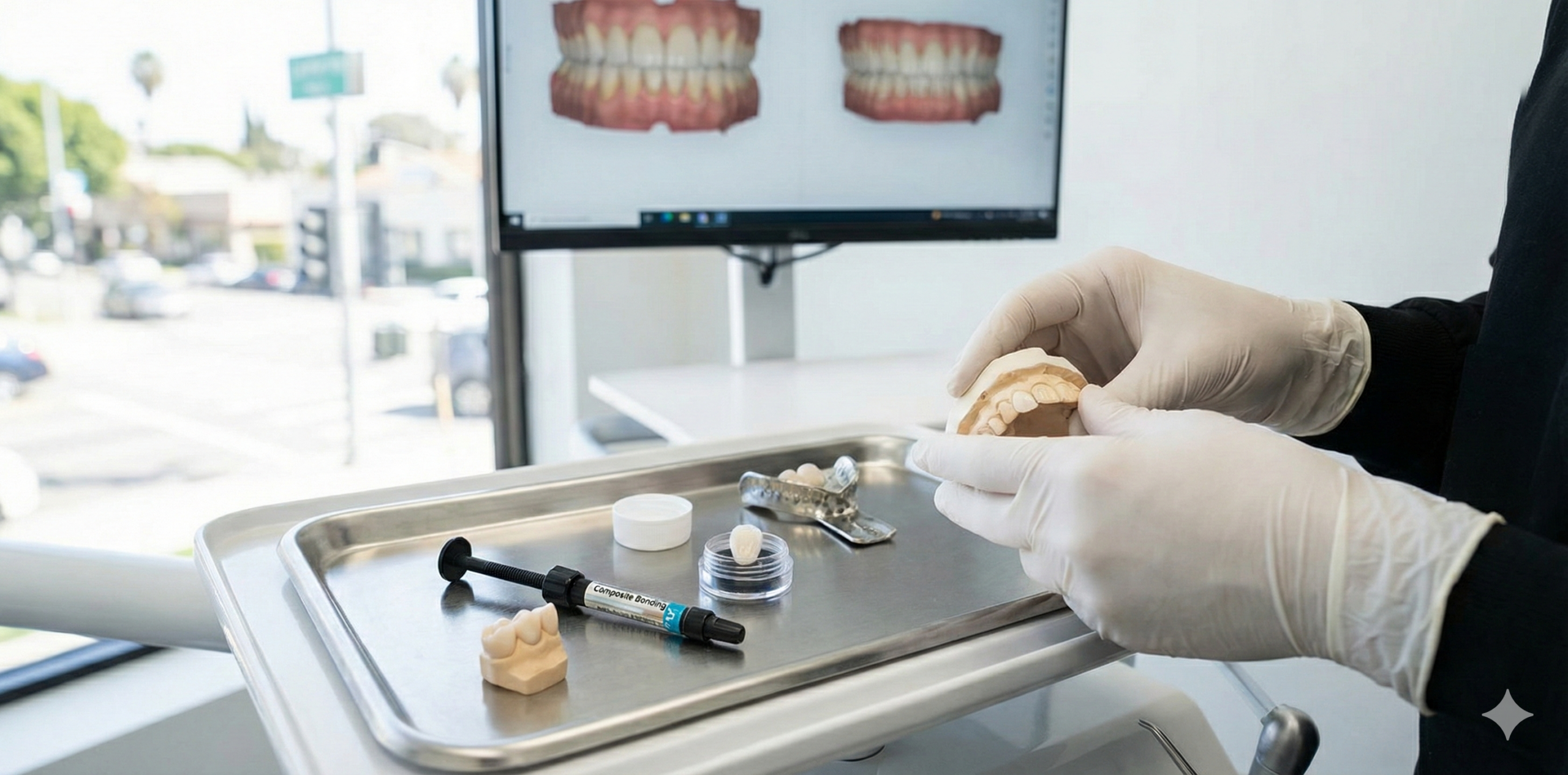

A chipped tooth can feel alarming — it affects how you look and how your mouth feels. Knowing your repair options makes it easier to choose a treatment that protects your oral health and restores your smile. In this clear, practical guide from Dental Line, we walk through common fixes — dental bonding, crowns, and veneers — and explain when each is appropriate. We’ll also cover what causes chips, immediate first-aid steps, and typical costs so you can plan your next move with confidence.
What Causes a Chipped Tooth and What Are the Symptoms?
Chips can happen for different reasons. Spotting the cause and the signs early helps prevent bigger problems down the road.
What Common Factors Lead to Chipped Teeth?
Chips most often result from everyday stresses and accidents, such as:
- Trauma from Accidents: Falls, collisions, and sports impacts can nick or chip enamel.
- Biting Hard Foods: Chewing ice, hard candy, or nutshells can fracture a tooth.
- Teeth Grinding: Bruxism slowly weakens enamel and makes teeth more likely to chip.
Recognizing these causes helps you take simple steps to protect your teeth.
What Symptoms Indicate a Chipped Tooth Needs Repair?
Some chipped teeth are cosmetic while others need care. Watch for these signs:
- Pain and Sensitivity: Sharp pain or sensitivity to hot, cold, or pressure may mean the chip reached deeper layers of the tooth.
- Visible Damage: A clear chip, notch, or crack in the tooth surface signals a need for evaluation.
- Difficulty Chewing: If biting or chewing hurts or feels awkward, the tooth may be structurally compromised.
Addressing these symptoms quickly can prevent further damage and discomfort.
What Immediate Steps Should You Take After Chipping a Tooth?
Quick, simple care after a chip can ease pain and protect the tooth until you see us.
How to Provide First Aid for a Chipped Tooth?
Follow these steps right away:
- Rinse Your Mouth with Warm Water: Gently clean the area to remove debris.
- Apply a Cold Compress: Hold a cold pack against your cheek to reduce swelling and ease pain.
- Avoid Using the Affected Tooth: Chew on the opposite side and avoid hard or sticky foods to prevent further damage.
These measures offer temporary relief while you arrange professional care.
When Should You See a Dentist for a Chipped Tooth?
Contact your dentist promptly if you notice any of these:
- Persistent Pain: Ongoing or worsening pain can mean deeper damage.
- Visible Fracture: Large chips or cracks that change the tooth’s shape need evaluation and likely restoration.
- Signs of Infection: Swelling, pus, or fever may indicate infection and require urgent treatment.
Early treatment reduces the chance of complications and improves long-term outcomes.
What Are the Main Treatment Options for Repairing a Chipped Tooth?
Several reliable restorations can repair a chip — the right choice depends on the size, location, and health of the tooth.
What Is Dental Bonding and When Is It Recommended?
Dental bonding uses a tooth‑colored resin that we sculpt onto the damaged area and polish to match the surrounding tooth. It’s a conservative, cost-effective fix for minor chips.
- Best Use Cases: Ideal for small chips and quick cosmetic repairs — often completed in a single appointment.
- Pros and Cons: Bonding is affordable and immediate, but it’s less durable than porcelain restorations and may need touch-ups over time.
How Do Porcelain Veneers Restore Chipped Teeth?
Veneers are thin porcelain shells bonded to the front of teeth to restore shape and appearance.
- Veneer Application Process: The process typically involves modest enamel shaping, impressions, and carefully placing the custom veneers.
- Ideal Candidates: Veneers suit patients with visible chips who want a long-lasting cosmetic improvement.
- Aesthetic Improvements: Porcelain veneers provide a natural, uniform look and resist staining better than composite resin.
How Do Dental Crowns Restore Severely Chipped or Broken Teeth?
Dental crowns are the go-to solution when a tooth is significantly chipped or weakened — they cover and protect the entire visible tooth.
What Are Dental Crowns and Their Benefits for Tooth Restoration?
Crowns are custom-made caps that rebuild the tooth’s shape, strength, and function.
- Types of Crowns: Porcelain, metal, or porcelain-fused-to-metal crowns each offer different balances of durability and aesthetics.
- Durability and Protection: Crowns shield weakened teeth and, with proper care, can last many years.
- Aesthetic Considerations: Porcelain crowns closely match natural tooth color, making them a common choice for front teeth.
When Are Crowns Preferred Over Bonding or Veneers?
Crowns are often recommended when:
- Severity of Damage: Large chips or cracks that compromise tooth structure need the full coverage a crown provides.
- Patient Preferences: If you want a stronger, longer-lasting restoration, a crown can be the better option.
- Long-term Outcomes: For badly damaged teeth, crowns tend to offer more predictable, lasting results.
For more complex gaps or missing teeth, other restorative options such as dental bridges may be appropriate to restore function and appearance.
What Are the Costs and Insurance Considerations for Chipped Tooth Repair?
Knowing typical costs and how insurance may help makes it easier to plan your treatment.
How Much Does Dental Bonding, Veneers, or Crowns Cost in Encino?
| Treatment Option | Average Cost | Factors Influencing Price |
| Dental Bonding | $300 – $600 | Size of chip, location |
| Porcelain Veneers | $900 – $2,500 | Number of veneers needed |
| Dental Crowns | $1,000 – $3,500 | Material type, complexity |
Use these ranges to budget, then consult with our team for a personalized estimate based on your situation.
What Insurance Coverage and Payment Options Are Available?
Coverage varies, but many plans help offset restorative costs. Consider these points:
- Common Insurance Plans Accepted: Check with your carrier to confirm coverage for restorative procedures.
- Payment Plan Options: We and many dental offices offer financing or in-office payment plans to spread out costs.
- Financial Assistance Resources: Some practices provide cash discounts or sliding-fee arrangements based on need.
We’re happy to review your insurance benefits and payment options so you can move forward with confidence.
Why Choose Dental Line and Dr. Irena Starchenko for Your Chipped Tooth Repair?
Dr. Irena Starchenko, DDS, leads Dental Line with a focus on individualized care and predictable results. Her experience in restorative dentistry means treatments are planned for both function and appearance, tailored to each patient.
How Does Dental Line Use Advanced Technology and Personalized Care?
At Dental Line, modern tools like digital imaging and precise treatment planning help us deliver comfortable, accurate outcomes. We combine technology with a patient-first approach so you get the right solution for your smile.
If you’d like to address a chipped tooth or get a professional opinion, contact us to schedule a consultation — we’ll walk you through options and next steps.
Frequently Asked Questions
What are the long-term effects of leaving a chipped tooth untreated?
An untreated chip can let bacteria reach vulnerable tooth layers, increasing the risk of decay and infection. Over time it can cause sensitivity, worsening fractures, and may require more invasive care like a root canal or extraction if left unchecked.
Can a chipped tooth affect my overall oral health?
Yes. A chip can change how your teeth meet when you bite, adding stress to nearby teeth and jaw muscles. If the pulp is exposed, infection is possible — so treating a compromised tooth helps protect overall oral health.
Are there any home remedies for managing a chipped tooth before seeing a dentist?
Home care can ease symptoms until you see us: rinse with warm salt water, apply a cold compress to reduce swelling, and use over-the-counter pain relievers as needed. These measures are temporary — professional care is the best way to fix the tooth.
How can I prevent future chips in my teeth?
Protect your teeth by avoiding hard foods, wearing a mouthguard for sports or if you grind your teeth, and keeping up regular dental check-ups. A balanced diet with calcium and fluoride also helps maintain strong enamel.
What should I expect during a dental visit for a chipped tooth?
We’ll examine the tooth, often with X-rays, to see the extent of damage. Then we’ll review treatment options — bonding, veneers, or crowns — and recommend the best plan. Procedures vary but may include local anesthesia, tooth preparation, and placement of the chosen restoration. You’ll receive care instructions for a smooth recovery.
Is it possible to repair a chipped tooth at home?
Minor chips might seem manageable, but home fixes don’t restore tooth strength or prevent future problems. Only a dentist can properly repair the tooth and reduce the risk of infection or further damage. We recommend scheduling an exam for any chip.
Conclusion
Fixing a chipped tooth protects both your smile and oral health. Dental bonding, veneers, and crowns each have clear benefits depending on the size and location of the chip. If you’re ready to find the right solution, schedule a consultation with our team — we’ll help you restore comfort, function, and confidence in your smile.