
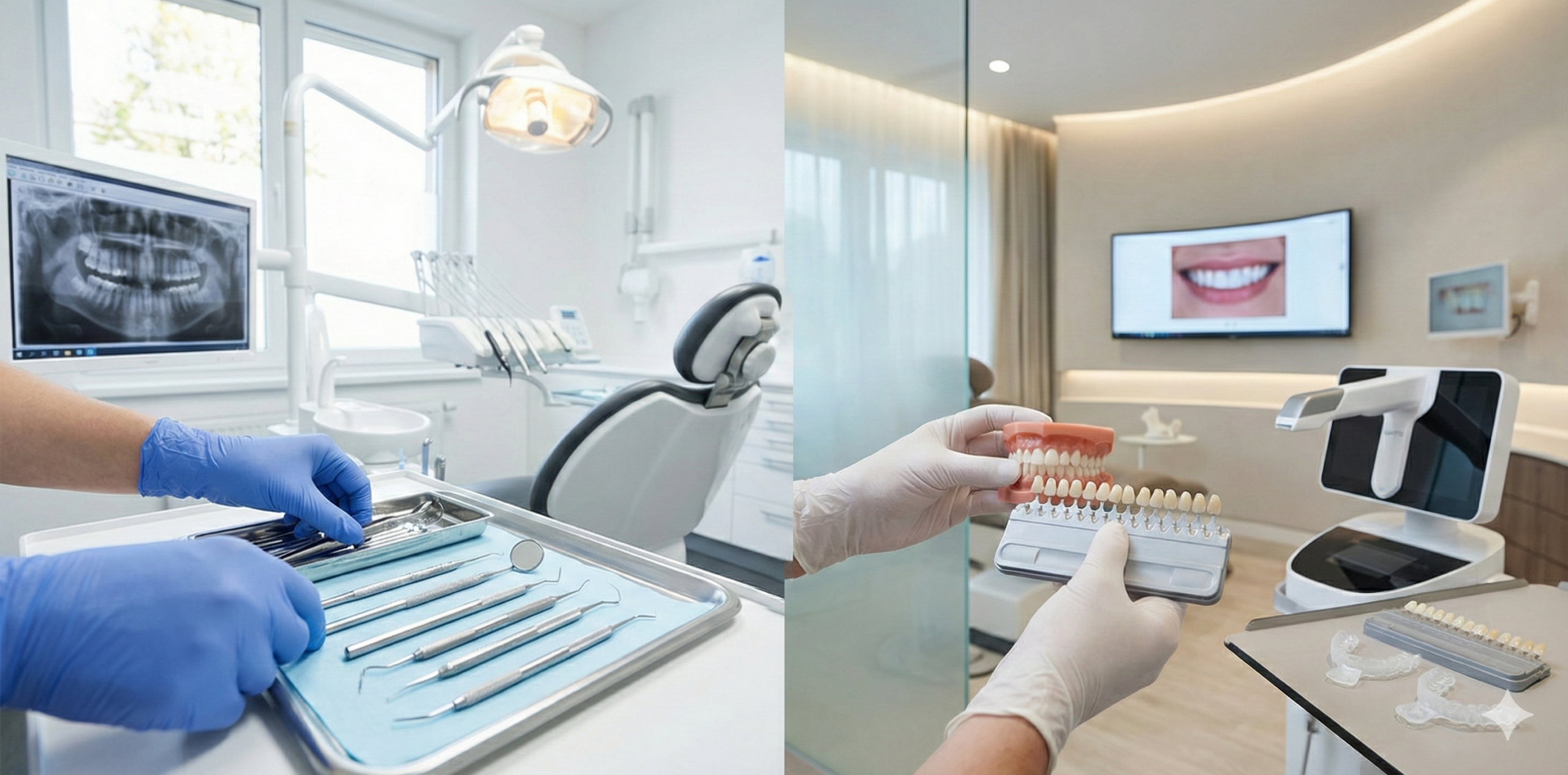

When you’re thinking about long-term oral health or a smile update, it helps to know the difference between dental care providers. General dentists concentrate on preventing, diagnosing, and treating everyday dental problems. Cosmetic dentists focus on improving the look of your teeth, gums, and overall smile. Below, we break down how their training and services differ so you can pick the right provider for your goals.
This guide walks through the education and skills that set general and cosmetic dentists apart, the typical services each provides, tips for choosing the right clinician, the benefits of combining both approaches, and answers to common patient questions.
What Training and Qualifications Distinguish General Dentists from Cosmetic Dentists?
The main difference between general and cosmetic dentists is where they put their focus. General dentists earn a Doctor of Dental Surgery (DDS) or Doctor of Dental Medicine (DMD) and receive broad training across all areas of oral health. That foundation readies them to handle everything from routine exams to more complex restorative work.
What specialized dental aesthetics training do cosmetic dentists undergo?
Cosmetic dentists build on dental school with extra training in esthetic techniques. They commonly take continuing-education courses, hands-on workshops, and certifications in smile design, restorative materials, and advanced cosmetic procedures. Many pursue credentials from groups like the American Academy of Cosmetic Dentistry (AACD) to demonstrate their skill. That additional focus helps them deliver predictable results for treatments such as professional whitening, veneers, and implant restorations with an eye toward appearance.
How do general dentists’ qualifications support family and oral health care?
General dentists are trained to care for patients of all ages, making them the go-to choice for family dentistry. Their education emphasizes preventive care—regular cleanings, exams, and patient education—to catch problems early and maintain oral health. They also complete ongoing training to keep up with advances in materials, techniques, and dental technology so families receive consistent, up-to-date care.
Which Services Are Provided by General Dentists Compared to Cosmetic Dentistry Procedures?
Services differ because the goals differ: general dentistry protects and restores oral health, while cosmetic dentistry improves how a smile looks. Many treatments overlap, and a coordinated approach often gives the best results.
What oral health maintenance and family dentistry services do general dentists offer?
Common services from general dentists include:
- Routine check-ups: Regular exams to monitor oral health and catch issues early.
- Preventive care: Professional cleanings, fluoride treatments, and sealants to reduce cavities and gum disease.
- Restorative services: Fillings, crowns, and bridges to repair or replace damaged teeth.
- Emergency care: Prompt treatment for toothaches, trauma, or other urgent problems.
Beyond prevention, general dentistry often involves restorative treatments that restore proper function and protect your long-term oral health.
What cosmetic dentistry procedures, such as dental crowns and bridges, enhance dental aesthetics?
Cosmetic dentists offer treatments that enhance the look of your smile, including:
- Teeth whitening: Professional systems to remove stains and brighten teeth safely.
- Veneers: Thin porcelain or composite shells that reshape and brighten the front teeth.
- Dental crowns: Caps that rebuild tooth shape and strength while improving appearance.
- Bridges: Fixed options to replace missing teeth and restore a natural-looking smile.
Crowns and bridges often serve both restorative and cosmetic goals—repairing function while improving how teeth look. These solutions help protect your mouth and preserve a confident smile.
Cosmetic treatments can also have a meaningful effect on self-confidence. Many patients report feeling younger and more self-assured after esthetic dentistry.
Cosmetic Dentistry for Youthful Smile Restoration
Smiles can show visible signs of aging. Advances in cosmetic and conservative restorative techniques give dentists new ways to rebuild structure and restore a more youthful appearance.
The role of cosmetic dentistry in restoring a youthful appearance, 1999
How Can Patients Choose Between a General Dentist and a Cosmetic Dentist?
Picking the right provider depends on your priorities: overall oral health, a cosmetic update, or both. Consider the type of care you need and the dentist’s experience in that area.
What factors should patients consider when selecting dental care specialists?
When choosing a dentist, look for:
- Experience and qualifications: Check education, specialized training, and how much experience the dentist has with the procedure you want.
- Patient reviews and testimonials: Read feedback from other patients to understand outcomes and the care experience.
- Office environment and technology: A modern, comfortable office with up-to-date equipment often means more accurate diagnoses and gentler treatment.
These considerations will help you make a well-informed choice for your care.
Research shows many patients prefer specialists for particular procedures, which underscores the value of matching the provider to the treatment.
Patient Preferences: General Dentists vs. Specialists
In one study, a notable share of patients (about 53.6%) preferred specialists over general practitioners for certain dental procedures—highlighting how patient expectations shape provider choice.
Factors influencing patients’ decisions while choosing a dental care provider, E Eisa, 2016
How do patient-focused care and advanced technology influence dental treatment choices?
Patient-centered care means treatments fit your goals, timeline, and comfort level. Modern tools—digital imaging, intraoral scanners, and laser therapy—can make diagnosis more precise and treatments less invasive. Seek a practice that listens to you and uses technology to improve outcomes.
If you want a practice that offers both general and cosmetic services, Dental Line, led by Dr. Irena Starchenko DDS, provides comprehensive care in Encino, CA with personalized treatment plans to meet each patient’s needs.
What Are the Benefits of Combining General and Cosmetic Dentistry for Comprehensive Oral Health?
Combining general and cosmetic dentistry gives you a complete approach: we address health and function first, then layer on esthetics for a predictable, long-lasting result.
How do restorative dental treatments like crowns and bridges support both function and aesthetics?
Restorative work such as crowns and bridges rebuilds tooth structure, protects surrounding teeth, and restores bite function—while also improving appearance. Well-designed restorations blend with your natural teeth and support long-term oral health by preventing further damage.
Why is ongoing oral health care important alongside cosmetic enhancements?
Regular check-ups and cleanings protect the results of cosmetic care. Good daily habits and routine dental visits help preserve restorations, prevent decay, and keep your smile looking its best for years.
What Are Common Patient Questions About General and Cosmetic Dentistry?
Below are answers to common questions patients have about cosmetic versus general dental care.
What procedures are considered cosmetic dentistry?
Cosmetic dentistry includes treatments focused on improving appearance: teeth whitening, porcelain veneers, cosmetic bonding, and certain orthodontic options. While these enhance looks, many also improve function and bite when planned with restorative care in mind.
Are cosmetic dental treatments covered by insurance?
Insurance coverage varies. Purely cosmetic procedures like whitening or veneers are often not covered, while restorative treatments such as crowns or bridges may be partially covered if they address a health issue. Always check with your insurer to confirm benefits for a specific procedure.
| Service Type | General Dentistry Services | Cosmetic Dentistry Procedures |
| Preventive Care | Routine check-ups, cleanings | – |
| Restorative Care | Fillings, crowns, bridges | – |
| Aesthetic Enhancements | – | Teeth whitening, veneers, bonding |
Understanding the differences between general and cosmetic dentistry helps you choose the right path—whether you need routine care, restorative work, an esthetic upgrade, or a combination. A comprehensive approach often gives the best, longest-lasting results. To learn more or schedule an appointment, feel free to contact us.
Frequently Asked Questions
What should I expect during my first visit to a cosmetic dentist?
Your first cosmetic visit typically begins with a thorough consultation. We’ll review your dental health, listen to your smile goals, and discuss options. The dentist may take photos, X-rays, or impressions to map out a tailored treatment plan. This visit is your chance to ask about process, timeline, costs, and what results are realistic.
How long do cosmetic dental procedures typically last?
Longevity depends on the treatment and your care. Whitening results can last months to a couple of years. Veneers often last 10–15 years with good maintenance. Crowns and bridges can last 5–15 years or longer depending on materials and oral hygiene. Regular check-ups and sensible habits extend the life of cosmetic work.
Are there any risks associated with cosmetic dental procedures?
All procedures carry some risk—temporary sensitivity, discomfort, or reactions to materials are possible. Poorly fitted restorations can cause problems over time, which is why choosing a qualified dentist and following aftercare instructions is important. Discuss your medical history and concerns so risks can be minimized.
How can I maintain my results after cosmetic dental treatments?
Keep up with daily brushing and flossing, use non-abrasive toothpaste, and avoid stain-causing foods and drinks when possible. Attend regular dental cleanings and follow any specific care instructions your dentist provides. Small habits make a big difference in preserving results.
What are the costs associated with cosmetic dentistry?
Costs vary widely by procedure, material, and clinician. Simple whitening may run a few hundred dollars, while veneers or implants can cost several thousand. Discuss pricing during your consultation and ask about payment plans or financing to make care manageable.
Can I combine general and cosmetic dentistry treatments?
Yes—combining both is often the best approach. Many patients address health and function with general dentistry first (for example, fillings or crowns) and then move to aesthetic treatments like whitening or veneers. That sequence protects your investment and delivers a more predictable outcome.
Conclusion
Knowing the difference between general and cosmetic dentistry empowers you to make choices that match your health needs and smile goals. Whether you’re pursuing routine care, restorative work, or an esthetic refresh, a coordinated plan that blends both approaches usually delivers the best results. To discuss options or book an appointment, please contact us today.