
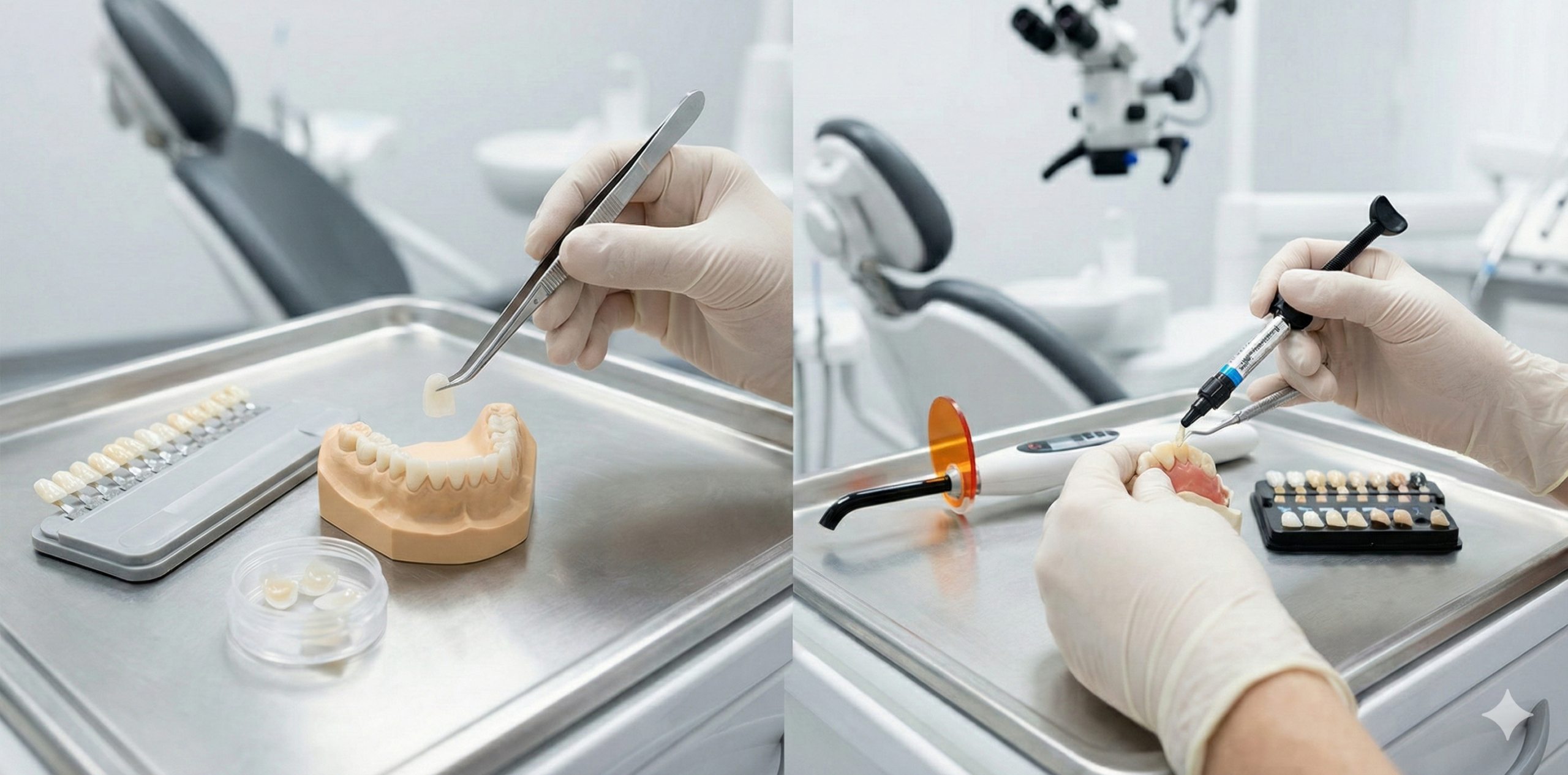

When you want to improve the look of your teeth, two common options are porcelain veneers and dental bonding. Both can address stains, chips, and small gaps — but they work differently and suit different needs. This guide walks through how each treatment is made, the benefits and trade-offs, and who typically gets the best results from each approach. If you’re dealing with discoloration, chips, or gaps in your teeth, understanding these options will help you choose the right path for your smile.
Cosmetic dentistry keeps advancing — new techniques and materials are expanding what veneers and bonding can achieve.
Recent Innovations in Cosmetic Dentistry: Veneers & Bonding
Cosmetic dentistry now blends surgical, orthodontic, periodontal, and restorative methods to improve teeth, gums, and bite. Recent innovations include digital imaging, improved composite materials, robotic-assisted workflows, and advanced orthodontic systems. Progress in whitening, veneers, implants, bonding, and gum contouring continues to boost clinical results, patient satisfaction, and access to cosmetic care.
Recent advances in cosmetic dentistry: A review, 2025
What Are Porcelain Veneers and Their Benefits?
Porcelain veneers are thin, custom-made ceramic shells that cover the front of teeth to improve shape, color, and alignment. They’re crafted to mimic the translucency and sheen of natural enamel. Veneers are especially effective for correcting deep stains, chips, and minor misalignment. Because porcelain resists staining and is highly durable, veneers are a popular long-term option for people who want a reliably natural-looking smile.
How Are Porcelain Veneers Made and Applied?
The veneer process usually starts with a consultation to map out your goals and select shade and shape. The dentist will remove a small amount of enamel so the veneer fits flush with your tooth. Impressions are taken and sent to a lab where your veneers are crafted. When they’re ready, the dentist bonds each veneer to the tooth with a strong dental adhesive and makes final adjustments for a natural fit and finish. With proper care, porcelain veneers can last many years.
What Are the Aesthetic and Durability Advantages of Porcelain Veneers?
Porcelain veneers look very natural because porcelain lets light pass through in much the same way real enamel does. They’re also highly resistant to stains from coffee, tea, and red wine. Thanks to their strength and finish, veneers often last 10 to 20 years or longer when kept with good oral hygiene and regular dental visits, making them a solid long-term investment in your smile.
What Is Dental Bonding and When Is It Recommended?
Dental bonding uses a tooth-colored composite resin to repair or reshape teeth. It’s a versatile, minimally invasive option that’s well suited for small chips, gaps, or surface discoloration. Bonding can also protect exposed roots or change the shape of a tooth. Because it’s typically completed in one visit without removing much enamel, bonding is a convenient choice for those seeking fast, cost-effective cosmetic touch-ups.
How Does Dental Bonding Procedure Work?
After a consultation, the dentist chooses a composite shade that matches your teeth. The tooth surface is prepared, the resin is applied and sculpted, then a curing light hardens the material. Finally, the bonded area is polished for a smooth, natural finish. Because the procedure is straightforward, many patients leave the office with immediate improvement.
What Are the Benefits and Limitations of Dental Bonding?
Bonding is typically faster and less expensive than veneers, often completed in a single appointment at a lower cost. However, composite resin is softer than porcelain and can stain or chip more easily. Bonding is best for minor cosmetic fixes; for extensive restoration after serious decay or fracture, dental crowns are usually the stronger choice.
How Do Porcelain Veneers and Dental Bonding Compare?
What Are the Differences in Cost and Financing Options?
Porcelain veneers typically range from $925 to $2,500 per tooth, depending on case complexity and materials. Dental bonding is more budget-friendly, usually costing between $300 and $600 per tooth. Many practices, including ours, offer financing plans to help spread the cost of cosmetic treatments so you can get the smile you want without paying all at once.
How Do Durability and Stain Resistance Differ Between Veneers and Bonding?
Veneers are more durable and stain-resistant, with a common lifespan of 10 to 20 years. Dental bonding generally lasts 3 to 5 years, though good oral care and avoiding certain habits can extend that. If longevity and stain resistance are top priorities, veneers are usually the better long-term option.
What Are the Differences in Tooth Preparation and Reversibility?
Preparing teeth for porcelain veneers requires removing a small amount of enamel, so veneers are considered a permanent change. Dental bonding is minimally invasive and often reversible or repairable, which makes it attractive for patients who want a less permanent approach to cosmetic improvement.
How Do Treatment Time and Number of Appointments Compare?
Veneers typically require multiple visits — consultation, impressions, and final placement — and the process may take several weeks. Bonding is generally completed in a single appointment, offering fast results for those who want immediate improvement.
Who Is an Ideal Candidate for Porcelain Veneers or Dental Bonding?
What Patient Profiles Benefit Most from Porcelain Veneers?
Porcelain veneers suit patients with more pronounced cosmetic concerns: stubborn discoloration, uneven teeth, or damage that requires a durable, long-lasting fix. Candidates should have good overall oral health and be committed to regular dental care to protect their investment.
When Is Dental Bonding the Preferred Cosmetic Solution?
Bonding is ideal for people with minor chips, small gaps, or surface stains who want a quick, affordable improvement. It’s also a good choice for patients who prefer a less permanent option or who want to test a cosmetic change before committing to something more involved.
How Can You Maintain Your Smile After Veneers or Bonding?
What Are the Best Practices for Oral Hygiene and Longevity?
Protect your results by brushing twice daily with a non-abrasive toothpaste, flossing daily, and keeping regular dental check-ups and cleanings. Avoid biting hard objects and consider a mouthguard for sports or teeth grinding to prevent damage to veneers or bonded teeth.
How Often Should You Schedule Follow-Ups and Repairs?
We recommend routine dental visits at least twice a year to monitor veneers or bonding. If you notice chips, sensitivity, or discoloration, contact your dentist promptly so repairs can be made before issues become larger problems.
Why Choose Dental Line and Dr. Irena Starchenko for Your Smile Makeover?
How Does Dr. Starchenko’s Experience Enhance Your Treatment?
Dr. Irena Starchenko brings more than 30 years of clinical experience to Dental Line. Her depth of practice in cosmetic and restorative dentistry means personalized treatment plans that balance looks, function, and long-term oral health.
What Advanced Technologies Does Dental Line Use for Veneers and Bonding?
At Dental Line, we use modern imaging, digital design, and precision tools to plan and deliver cosmetic treatments. These technologies help us create predictable, custom results that match your facial features and smile goals — all backed by Dr. Starchenko’s clinical expertise.
These modern techniques are supported by ongoing research into materials and digital design, which continue to improve outcomes for veneers and bonding.
Advancements in Cosmetic Dentistry: Materials & Digital Design
Over recent decades, cosmetic dentistry has evolved into a multidisciplinary field that pairs biological care with digital tools and advanced materials. Technologies such as Digital Smile Design (DSD), CAD/CAM, 3D printing, and biomimetic restorative materials enable precise, personalized restorations using options like lithium disilicate and zirconia. Digital planning and imaging improve aesthetic predictability, while stronger adhesives and nanocomposite materials increase strength, translucency, and biocompatibility — all encouraging more conservative, long-lasting treatments.
Advancements in Cosmetic Dentistry, CT Bobba
Frequently Asked Questions
What is the typical lifespan of dental bonding compared to porcelain veneers?
Dental bonding usually lasts about 3 to 5 years, depending on care and habits. Porcelain veneers are more durable and often last 10 to 20 years with proper maintenance. Think of bonding as a shorter-term, lower-cost fix and veneers as a longer-term investment.
Are there any specific dietary restrictions after getting veneers or bonding?
After either treatment, avoid very hard or sticky foods that could chip or loosen restorations. For veneers, limiting heavily staining foods and drinks — coffee, tea, red wine — helps preserve their appearance. Good daily care and regular check-ups also protect your results.
Can dental bonding be repaired if it chips or wears down?
Yes. Bonding can usually be repaired quickly by adding more composite resin to the affected area. Prompt attention helps prevent further damage and keeps the repair simple.
How do I choose between porcelain veneers and dental bonding?
Your choice depends on the extent of the cosmetic issue, your budget, and how long you want the results to last. Veneers are best for larger, long-term changes; bonding is a faster, more affordable option for minor corrections. A consultation will help you decide what fits your goals.
What should I expect during the recovery period after getting veneers or bonding?
Recovery is minimal. You may have mild sensitivity to hot or cold for a few days, which usually resolves. Follow your dentist’s aftercare advice, avoid risky foods for a short time, and maintain good oral hygiene to support healing and longevity.
Are there any age restrictions for getting veneers or bonding?
There aren’t strict age limits, but candidates should have fully developed teeth (usually in late adolescence) and good overall oral health. A dental consultation will confirm whether a treatment is appropriate for your situation and timing.
Conclusion
Both porcelain veneers and dental bonding can transform your smile — veneers for a longer-lasting, highly aesthetic result; bonding for a fast, cost-effective improvement. Knowing the differences helps you pick the solution that matches your needs and lifestyle. For a personalized plan, schedule a consultation with our team and we’ll help you choose the best path for your smile.